
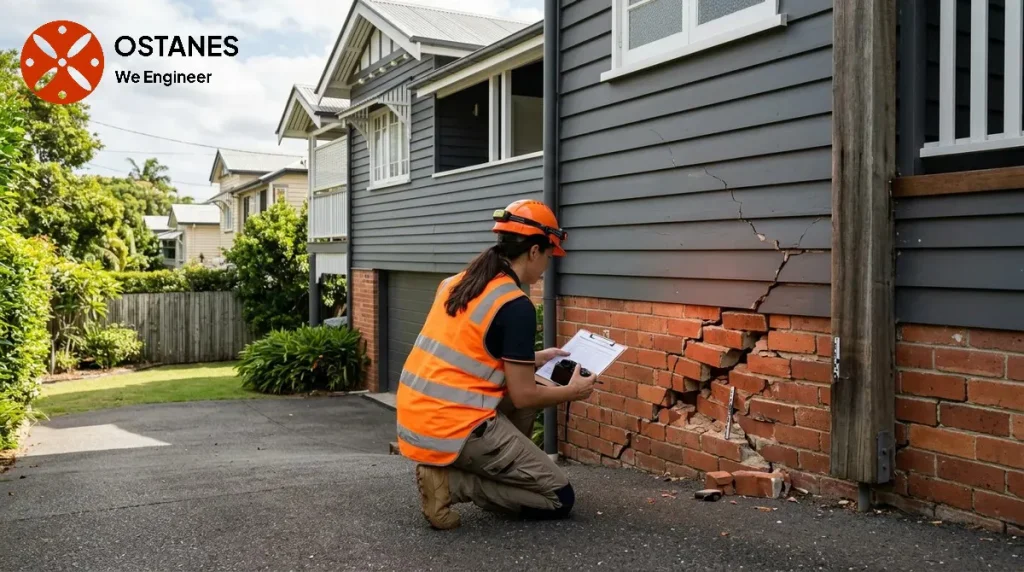
Impact damage may affect supports and connections beyond the visible point of contact. Address access safety and document the incident before choosing a local repair or further structural investigation.
When is a structural assessment needed?
A structural assessment becomes necessary when an impact event introduces uncertainty about a building’s integrity. This includes situations where there is visible damage near load-bearing elements, suspected movement of structural components, or any situation where the safety of occupants or the building itself is in question. The severity and location of the impact event are key factors. For instance, a vehicle impact building damage scenario might cause obvious external damage, but internal structural elements could also be affected without clear external signs.
While photographs and descriptions can document visible conditions, they cannot establish the specific internal condition of structural elements, assess unseen load path alterations, or determine the overall stability of a property. An on-site assessment by a qualified structural engineer is typically required to evaluate the true extent of potential structural compromise and provide a professional opinion on the building’s safety and stability.
What an impact may affect
An impact can affect various parts of a building, from its primary structural frame to non-load-bearing finishes. The building’s load paths, which are the continuous routes through which gravity and other forces are transferred to the ground, can be disrupted. Structural members such as beams, columns, and load-bearing walls may be directly damaged, displaced, or distorted. The connections between these members, crucial for transferring forces, can also be fractured or weakened. Supporting elements like foundations or bracing may similarly be compromised.
For example, a fallen tree striking a roof might damage rafters and roof trusses, potentially altering how loads are distributed down through walls to the foundation. A construction plant strike against a wall could cause localised damage to cladding and finishes, but it might also induce cracks or displacement in the underlying structural frame or distort window and door openings. Even seemingly minor external damage can sometimes indicate compromised integrity in the hidden structural system. An engineering assessment examines these elements to determine if the building’s ability to safely carry loads has been affected.
Immediate safety and make-safe decisions
If a building appears unstable, if elements are falling, if there is exposed structural damage, or if movement continues after an impact, immediate action is required. Access to the affected area should be restricted to prevent injury. These situations require urgent professional direction from emergency services or qualified engineers. Make-safe measures, such as temporary shoring or propping, are critical for stabilising damaged sections and preventing further collapse. These actions must only be designed and overseen by qualified professionals who can assess the specific risks and implement appropriate solutions. Homeowners or occupants should not attempt to carry out such measures themselves, as this can introduce further hazards.
What information to preserve before assessment
Before a structural assessment, preserving relevant information about the impact event can be valuable. This includes noting the precise sequence of events, the exact location of the impact, and taking photographs of the visible damage from various angles, both close-up and wider views. Document any visible changes immediately after the impact and any subsequent movement or deterioration. Details about restricted access or unsafe conditions should also be recorded. Witness information, if available, can provide context, as can any existing building records or plans that might shed light on the original construction. While these records are helpful for context, they do not replace an on-site inspection by a qualified engineer, nor do they conclusively prove causation or entitlement for insurance claims.
Impact damage and insurance evidence
An independent structural assessment can play a role in situations involving impact damage insurance claims. The engineer’s report documents the observed conditions of the building, identifies potential structural damage, and provides a technical opinion on the likely cause or consequences of the impact. This report serves as objective technical evidence regarding the physical state of the property after the event. However, it is important to understand that an engineering assessment focuses on the structural integrity and physical damage. Decisions regarding insurance coverage, liability, policy terms, and claim approval remain the responsibility of the insurer, legal representatives, and other involved parties. An engineering report provides factual observations and technical conclusions but does not guarantee a specific insurance claim outcome.
Queensland context and documentation boundaries
In Queensland, the safety and structural integrity of buildings are governed by various regulations. The Building Act 1975 (Qld), for instance, sets out provisions related to building standards and safety. When a building sustains impact damage, assessing its compliance with relevant standards and its overall safety is critical. However, this article cannot determine the specific legal or regulatory requirements for any particular property or event. Such determinations require an assessment of the specific circumstances by qualified professionals. Any statements regarding current compliance or regulatory obligations should always be verified against the latest official sources and specific property details.
What to do after an impact
After an impact event, the immediate priorities are safety and information preservation. First, protect people by restricting access to any areas that appear hazardous. Avoid making unsupported conclusions about the extent of damage or attempting repairs. Document the scene and any visible damage thoroughly. To understand the true extent of potential issues, we approach suspected structural impact by providing an evidence-led engineering assessment. If you suspect structural damage, seeking a professional structural engineering assessment is the appropriate next step. This can involve obtaining a detailed Insurance Damage Structural Report to document the building’s condition.
Can photographs show whether impact damage is structural?
Photographs can effectively record visible damage and conditions immediately after an impact. However, they cannot reveal hidden structural issues, internal damage to members, or altered load paths. An on-site inspection by a qualified structural engineer is necessary for a comprehensive assessment.
Should I contact an engineer after a vehicle collides with a building?
It is advisable to contact an engineer if the vehicle collision involved a significant impact, if there is any visible damage to load-bearing elements, if the building appears to have shifted, or if there is any doubt about its structural integrity or safety. An engineer can assess the situation and advise on the next steps.
What should I do if a building appears unsafe after an impact?
If a building appears unsafe, immediately evacuate occupants from the affected area and restrict access. Do not attempt to enter or stabilise the structure yourself. Contact emergency services and qualified professionals, such as a structural engineer or a make-safe contractor, for urgent assessment and direction.
Can a structural assessment guarantee an insurance claim outcome?
No, a structural assessment provides a professional engineering opinion on the physical damage and structural integrity of a building. While this report is valuable evidence for an insurance claim, it does not guarantee claim approval, coverage, or a specific financial outcome. These decisions rest with your insurer based on your policy terms.
Look beyond the visible point of impact
Provide the incident description, photographs, drawings and the sequence of emergency or temporary works. An impact may affect connections or supports away from the obvious damage, so a local surface repair may not resolve the structural issue. Do not enter or use an affected area until access concerns have been addressed. The inspection should identify the elements assessed, concealed areas and any testing needed. If a claim is involved, preserve the technical evidence and distinguish repair recommendations from the insurer’s coverage decision.
Discuss your project with Ostanes Engineering
Ostanes Engineering’s insurance damage structural report addresses the agreed structural damage questions. A forensic structural investigation may be appropriate where the mechanism or competing explanations require deeper investigation. These services provide technical evidence and do not guarantee claim acceptance.
Complete the contact form with your property location, the concern or proposed work, safe photographs and any available drawings, soil report or earlier reports. Contact us through the form for a project-specific cost estimate. The team will respond as soon as possible.
Official references and further reading
For the relevant regulatory or maintenance context, consult Insurance Council expert-report guidance and BPEQ registration. These resources complement the project-specific advice described above.
