
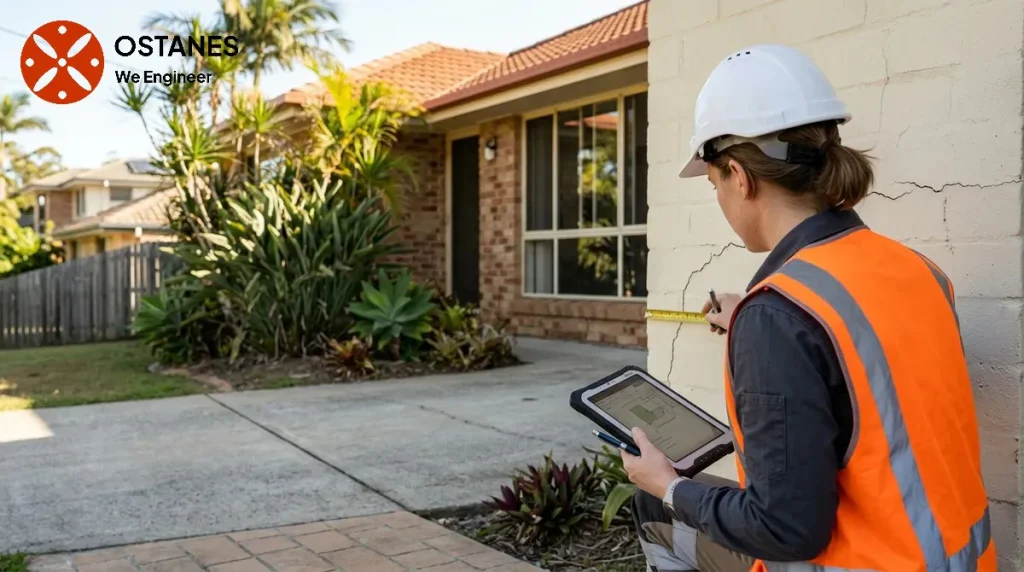
Choose a dilapidation-report provider whose expertise matches the survey and any engineering opinions required. A photographic condition record and a professional structural assessment are not necessarily the same scope.
Who does dilapidation reporting in Queensland?
In Queensland, several types of professionals undertake dilapidation reporting. These generally include RPEQ structural engineers, licensed building consultants, and general building inspectors. Each brings a different focus and level of technical expertise. The choice is not simply about professional title; it requires a closer look at their specific qualifications, relevant project experience, their approach to inspection, and the quality of their documentation.
Which professional may suit the project?
The appropriate professional depends on the context. For documenting general property conditions prior to minor works, a licensed building consultant or a general inspector might be suitable. These professionals typically record existing visible defects and general wear.
However, if the project involves significant excavation, nearby heavy construction, or if there are pre-existing signs of movement, cracking, or other potential structural issues, an RPEQ structural engineer may be a more appropriate choice. An RPEQ (Registered Professional Engineer of Queensland) possesses the specific qualifications and experience to assess structural integrity, interpret patterns of movement, and provide engineering judgment on complex issues that go beyond visual observation. Their assessment can be critical when the report might need to address potential structural impacts or be relied upon in situations involving structural claims.
Queensland qualification and registration checks
Before engaging a professional, it is important to verify their credentials. For structural engineering assessments, confirm that the individual is an RPEQ. The Professional Engineers Act outlines the framework for the regulation of professional engineering services in Queensland. Readers can verify RPEQ registration information through the Board of Professional Engineers of Queensland (BPEQ) register. For building consultants, check their licensing status with the Queensland Building and Construction Commission (QBCC). General inspectors may not hold specific licences for inspection work, so their experience and professional affiliations become more central to evaluation. Always confirm the identity of the person who will conduct the inspection and be responsible for the report.
What a useful report should document
A useful dilapidation report should provide clear, objective documentation of a property’s condition at a specific point in time. Key features to look for include precise property identification, clear descriptions of observed conditions (such as cracks, distortions, or defects), and accurate location details within the property. The report should be supported by dated photographs or other visual records, and it should clearly state any limitations of the inspection, such as inaccessible areas. The author or firm responsible for the report should be identifiable, and the document should reflect a systematic approach to condition recording. While no specific format guarantees acceptance, clear and comprehensive documentation can be valuable. For guidance on relevant documentation, readers may consult general Insurance Council of Australia advice regarding property records.
How to compare candidates
When selecting a professional, consider asking potential candidates these questions to assess their fit for your specific project:
- What are your relevant qualifications, registrations, or licences? Can you provide evidence of these?
- Do you have specific experience with projects of this nature and scale, or with properties exhibiting similar pre-existing conditions?
- What is the scope of your inspection? Will it cover all relevant areas of the property, including external structures, retaining walls, and visible services?
- How do you record observations, and what level of detail will be included in the report? Will it include dated photographs and location diagrams?
- How do you address areas of uncertainty or limited visibility during the inspection?
- Who will be ultimately responsible for the report and its findings? Will it be signed by a registered professional if engineering judgement is required?
- What is your process if potential structural concerns are identified during the inspection?
These questions can help determine if the professional’s expertise aligns with the project’s demands and if their reporting standards meet your needs. A qualified dilapidation inspector provides clear evidence of their competence and a transparent approach to their work.
Who prepares a dilapidation report in Queensland?
Dilapidation reports in Queensland can be prepared by RPEQ structural engineers, licensed building consultants, or general building inspectors. The choice depends on the project’s complexity, the type of conditions needing documentation, and the report’s intended use. It is important to assess each professional’s qualifications, project fit, and reporting standards.
Does a dilapidation inspector need to be an RPEQ?
Not all dilapidation inspections require an RPEQ. However, if the report needs to address structural integrity, potential movement, or engineering judgment on complex building issues, an RPEQ structural engineer is typically the appropriate professional. For the specific application of the Professional Engineers Act, verify current Queensland requirements and guidance from BPEQ.
What should I check before choosing a qualified dilapidation inspector?
Before choosing an inspector, verify their professional identity, qualifications, and relevant licences (e.g., RPEQ or QBCC licence). Assess their experience with similar projects, understand the scope of their proposed inspection, review examples of their reporting style, and clarify their process for handling potential structural concerns.
Can a general inspector assess structural cracking?
A general inspector can observe and document visible cracking, but assessing its structural significance requires engineering expertise. Diagnosing the cause, predicting future behaviour, or recommending remedial actions for structural cracking typically falls within the scope of an RPEQ structural engineer. If structural cracking is suspected, an on-site RPEQ assessment is advisable.
What makes dilapidation documentation useful?
Useful dilapidation documentation features clear and precise descriptions of observed conditions, specific location details, dated photographic evidence, and a stated scope and any limitations of the inspection. It should also clearly identify the professional responsible for the report and be presented in a way that is easy to understand and reference.
Choose qualifications that match the survey’s purpose
A photographic condition survey and a report giving professional structural opinions are not necessarily the same engagement. Ask the provider about relevant experience, the report method and who is responsible for any engineering assessment. Where professional engineering services are involved, the applicable Queensland registration arrangements must be satisfied. Agree on site access, location references, exclusions and document retention. Select the scope and responsible expertise for the actual project.
Discuss your project with Ostanes Engineering
For help with the structural questions in this guide, discuss dilapidation report with Ostanes Engineering. forensic structural investigation may also be relevant where the assessment or proposal identifies that need. Agree on the scope, evidence and deliverables before commissioning additional work.
Complete the contact form with your property location, the concern or proposed work, safe photographs and any available drawings, soil report or earlier reports. Contact us through the form for a project-specific cost estimate. The team will respond as soon as possible.
Official references and further reading
For the relevant regulatory or maintenance context, consult BPEQ registration and Queensland approvals and inspections. These resources complement the project-specific advice described above.
