
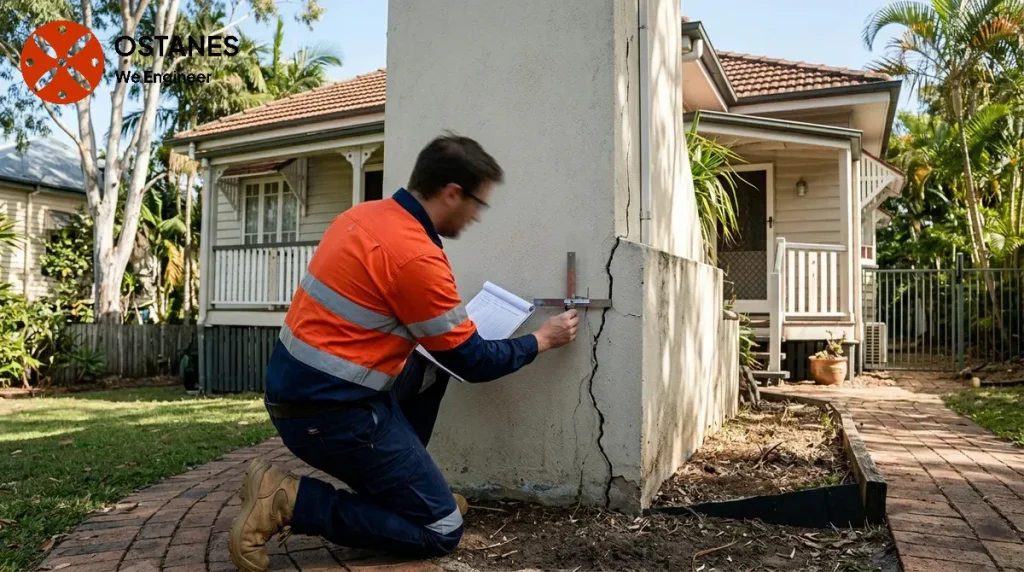
Some structural cracks can be repaired, but the response should follow sufficient investigation of the cause and ongoing movement. Cosmetic filling, drainage rectification and structural repairs are different solutions.
What makes a crack potentially structural?
A crack’s characteristics can offer clues that inform a professional assessment, though they do not provide a definitive diagnosis. Factors such as a crack’s location (e.g., near corners, openings, or load-bearing elements), its direction (e.g., vertical, horizontal, diagonal, stepped), and its pattern may suggest different underlying conditions. Observing surrounding damage, like displaced elements or distorted frames, can also be relevant. Furthermore, noting whether a crack is widening, lengthening, or remaining stable over time is important. While these observations can guide an engineer’s investigation, photographs or written descriptions alone cannot establish a property-specific diagnosis or confirm whether a crack is structural.
How diagnosis informs repair decisions
The process of addressing structural cracks begins with a thorough diagnosis. First, an engineer will consider whether active movement is occurring. This often involves assessing the crack’s history and characteristics, sometimes through monitoring over a period. If active movement is indicated, the next step in the structural crack repair process is to investigate the possible underlying causes. These could range from soil movement, drainage issues, or changes to loads on the structure, to material degradation. How are structural cracks repaired? The specific repair recommendations are developed only after the underlying cause is understood and the movement status is determined. This ensures that any proposed solution addresses the root problem rather than just the visible symptom. An engineering assessment informs whether structural remediation is needed or if other treatments are more appropriate for the identified cause and property conditions.
Structural remediation versus cosmetic repair
It is important to distinguish between structural remediation and cosmetic repair when dealing with cracks. Structural remediation aims to address the underlying cause of cracking and stabilise the building element itself. This type of work is determined by an engineering assessment that identifies the source of the problem. In contrast, cosmetic repair, such as filling and painting, focuses solely on concealing the visible crack. While cosmetic fixes can improve appearance, they do not resolve any underlying structural issues. Applying cosmetic treatments without a prior diagnosis risks masking a more significant problem that could continue to develop unnoticed. For effective fixing structural wall cracks, understanding whether the crack requires structural attention or merely aesthetic treatment is crucial.
Queensland engineering context
Confirm the required design or inspection documentation with the building certifier. Form 15 concerns building design or specification; Form 12 concerns an appointed competent person’s aspect inspection; Form 16 belongs to the relevant inspection-certificate process. The appropriate form, signatory and evidence depend on the actual task, and an engineering document does not itself grant building approval.
Can structural cracks be repaired?
Yes, some structural cracks may be repairable, but the suitable response depends on a professional diagnosis that confirms whether movement is active and identifies the underlying cause.
How are structural cracks repaired?
Structural crack repair methods are selected after an engineering assessment determines the crack’s cause and movement status. The approach addresses the root problem, not just the visible symptom.
What is involved in a structural crack repair process?
The process typically involves an initial observation, an engineering assessment to determine if movement is active, an investigation into potential underlying causes, and then a decision on whether structural remediation or cosmetic treatment is appropriate.
Can fixing structural wall cracks be cosmetic only?
Cosmetic treatments address only the visible appearance of cracks. They do not resolve underlying structural issues, which require a professional assessment to distinguish from purely aesthetic concerns.
Repair the cause before treating the appearance as resolved
A repair should follow sufficient understanding of the crack’s mechanism and whether movement is ongoing. Cosmetic filling, masonry repairs, drainage work and structural strengthening are different responses, not interchangeable options. Ask what must be investigated before a repair can be specified and whether monitoring or construction-stage inspection is needed. Keep before-and-after records and the final design documents. An engineer’s repair advice or certificate is limited to its stated scope and does not automatically approve all building work or guarantee that movement will never recur.
Related property guidance
For background on the related issue, read underpinning assessment before repair. Use it alongside the project-specific evidence and service scope described in this guide.
Discuss your project with Ostanes Engineering
Ostanes Engineering offers a structural crack and movement report to assess the reported symptoms and identify appropriate next steps. If the findings justify new foundations or remedial structural design, foundation structural engineering can be discussed as a separate scope; it is not assumed to be necessary for every crack.
Complete the contact form with your property location, the concern or proposed work, safe photographs and any available drawings, soil report or earlier reports. Contact us through the form for a project-specific cost estimate. The team will respond as soon as possible.
Official references and further reading
For the relevant regulatory or maintenance context, consult Queensland inspection roles and BPEQ certification update. These resources complement the project-specific advice described above.
