
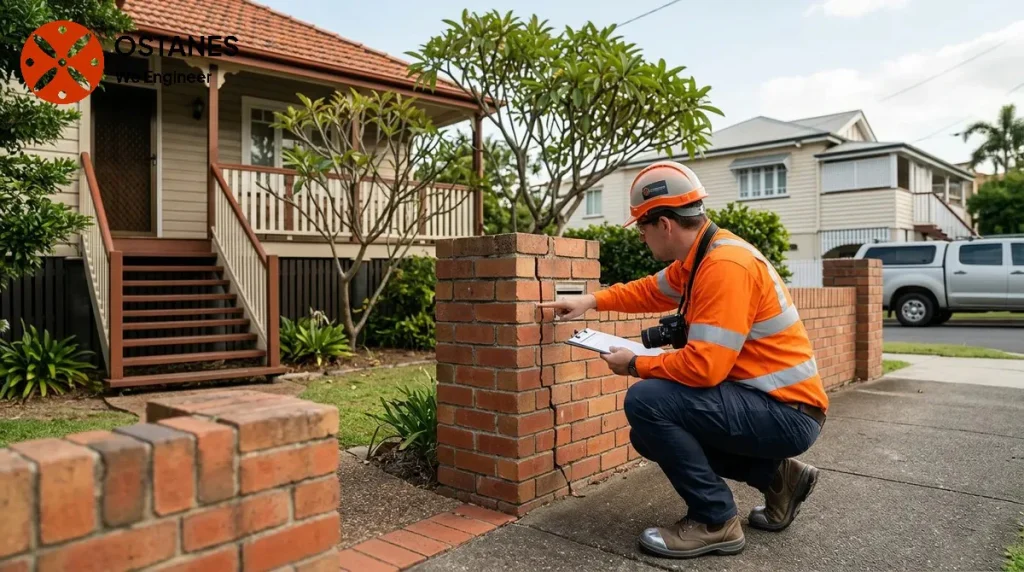
A dilapidation report creates a condition baseline before works that may affect surrounding property. Agree on the relevant areas and permissions before construction, rather than trying to reconstruct the original condition later.
What a dilapidation report is for
The primary purpose of a dilapidation report is to establish a documented record of the existing visible condition of properties adjacent to a proposed construction site. This baseline recording captures the state of these properties—including any existing cracks, defects, or signs of movement—prior to the commencement of works that might impact them. Such a record can be helpful if concerns about new or worsening damage arise during or after construction, providing an objective reference point for later discussions about alleged changes in condition.
Construction scenarios that may warrant baseline condition recording
Certain construction activities carry a higher potential for impacting adjoining properties, making a pre-construction condition report a prudent consideration. When to get a condition report often depends on these specific scenarios:
- Deep Basement Excavation: Excavating deep basements, especially in reactive soils or close to existing foundations, can alter subsurface stress and moisture conditions. This may lead to ground movement that could affect nearby structures. The extent of this concern increases with excavation depth, soil type, and the age and type of construction of the adjacent property.
- Structural Demolition: The demolition of significant structures, particularly those physically connected to or in very close proximity to neighbouring buildings, can induce vibrations or ground disturbances. Even controlled demolition can create impacts that may affect the integrity of adjacent properties.
- Vibration Piling: Driving piles into the ground, especially using vibratory methods, generates ground-borne vibrations that can travel through soil and impact nearby foundations and structures. The risk is generally higher for older buildings, those with shallow foundations, or properties constructed on less stable ground.
- Heavy Machinery Access: The repeated movement of heavy construction machinery, particularly on unpaved ground or close to property boundaries, can cause ground compaction, settlement, or vibrations. This is especially relevant if access routes are narrow or if machinery operates near sensitive structures or utility lines.
In each of these scenarios, factors like the proximity of the work to neighbouring buildings, the type of soil, the depth of excavation, and the structural resilience of adjacent properties all influence the potential for impact.
Queensland requirements and project-specific advice
Understanding whether a dilapidation report is a project risk management tool or a specific legal requirement is key. In Queensland, project owners and contractors should consider both practical risk mitigation and any applicable regulatory frameworks. Owners and builders are encouraged to review current official guidance from relevant Queensland authorities regarding construction impacts on neighbours. This includes, where applicable, information related to the
Building Act 1975
(Qld), guidance on QBCC Forms 12/15/16, and general neighbour law guidance provided by the Queensland Government, as these sources outline various responsibilities and notification requirements in construction. Always consult current official documents and, where necessary, seek legal advice to confirm any statutory obligations relevant to your specific project, as this article does not establish legal duties or approval outcomes.
Questions to ask before construction begins
Before commencing construction, consider these questions to assess whether recording the baseline condition of neighbouring properties is appropriate for your project:
- What type of construction work is planned (e.g., excavation, demolition, piling, heavy machinery use)?
- How close will this work be to adjoining residential or commercial properties?
- What are the likely effects of the proposed excavation or demolition on ground stability or nearby foundations?
- Will the construction activity generate significant ground-borne vibration or noise?
- Does heavy machinery need to access the site close to neighbouring structures or boundaries?
- Are there any existing visible cracks, settlement, or structural concerns in the neighbouring properties?
- Has a professional engineer reviewed the project plans to identify potential impacts on adjoining properties?
Is a dilapidation report needed for every construction project?
No, a dilapidation report is not universally required for every construction project. The necessity typically depends on factors such as the type and scale of work, its proximity to neighbouring properties, and the potential for impact from activities like excavation or vibration.
Why complete a dilapidation report before construction?
Completing a dilapidation report before construction establishes an impartial record of existing conditions in nearby properties. This baseline can be invaluable for reference if claims of damage arise during or after construction, helping to clarify whether changes in condition are new or pre-existing.
When should I get a condition report?
You should consider getting a condition report during the pre-construction planning phase, before any site work commences that could potentially affect adjoining properties. This timing ensures the record accurately reflects conditions before any project-related alterations or disturbances.
Does Queensland law require a dilapidation report?
Specific legal requirements for dilapidation reports in Queensland depend on the nature and scale of the project. Property owners and builders should consult current official sources like the Queensland Government’s guidance on building laws and neighbour relations to understand any statutory obligations relevant to their specific project.
Do excavation, demolition or piling change the decision?
Yes, excavation, demolition, and piling activities can significantly influence the decision to obtain a dilapidation report. These activities inherently carry a higher risk of ground movement or vibration, increasing the potential for impact on nearby structures compared to less intrusive construction methods.
Create the baseline before work can change the condition
A dilapidation survey is most useful when the relevant condition is recorded before excavation, demolition or other works begin. Agree on the survey boundaries, permissions and areas that may be inaccessible. Photographs should be tied to identifiable locations so later comparisons are meaningful. Existing damage should be documented without assuming its cause. If damage is later alleged, the baseline is one part of the evidence; a separate investigation may be needed to assess change, mechanism and possible relationship to the works.
Discuss your project with Ostanes Engineering
For help with the structural questions in this guide, discuss dilapidation report with Ostanes Engineering. forensic structural investigation may also be relevant where the assessment or proposal identifies that need. Agree on the scope, evidence and deliverables before commissioning additional work.
Complete the contact form with your property location, the concern or proposed work, safe photographs and any available drawings, soil report or earlier reports. Contact us through the form for a project-specific cost estimate. The team will respond as soon as possible.
Official references and further reading
For the relevant regulatory or maintenance context, consult BPEQ registration and Queensland approvals and inspections. These resources complement the project-specific advice described above.
