
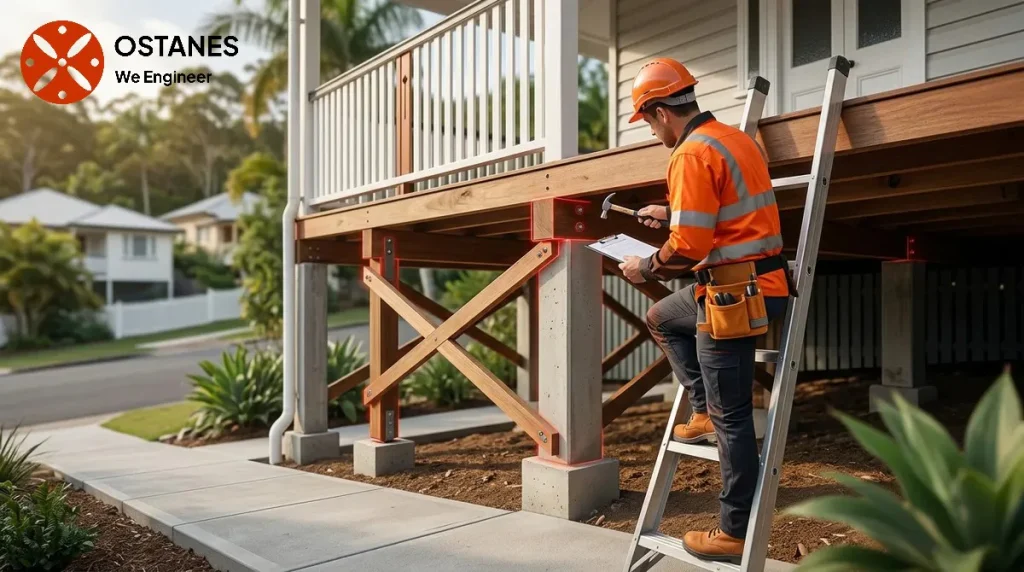
A pre-purchase structural inspection covers the agreed accessible structural elements and questions. Confirm its reporting, record-review and measurement scope, and identify exclusions before assuming it is a complete property assessment.
What a pre-purchase structural inspection may cover
An independent pre-purchase structural inspection typically involves a visual assessment of readily accessible parts of a building to identify signs of structural distress. This pre purchase structural inspection scope often includes elements such as foundations, footings, load-bearing walls, columns, beams, floor systems, and roof framing. Engineers look for observable conditions that may indicate movement, settlement, cracking, deformation, or deterioration affecting these critical components. While an inspection can confirm visible signs like cracking patterns, uneven floors, or distortions in the building frame, the assessment focuses on interpreting these observations in an engineering context. The final report will typically categorise these observations and provide an engineering opinion on their significance. What is checked before buying is primarily based on visual evidence within accessible areas, leading to findings that may recommend further investigation or monitoring.
Access limitations and exclusions
Physical access limitations are a key factor in determining what an inspection can cover. Areas that are concealed, obstructed, or physically inaccessible will typically not form part of the visual inspection. This can include walls hidden behind finishes, foundations obscured by landscaping, areas under furniture, or confined roof and subfloor spaces with limited entry. Such conditions limit direct observation of structural components, meaning the inspection cannot provide findings for those specific areas. Additionally, pre-purchase structural inspection exclusions often relate to specialist trade areas beyond structural engineering. These commonly include electrical systems, plumbing, gas fitting, hazardous materials like asbestos, pest infestations (e.g., termites, borers), swimming pool functionality, or matters governed by specific trades. The inspection’s focus remains on the structural integrity of the building.
Structural inspection compared with building and pest reporting
A structural inspection by a qualified engineer differs from general building and pest reporting in its primary focus and depth of assessment. General building reports typically cover a broader range of building elements, including general defects, maintenance issues, and non-structural components, while pest reports specifically identify evidence of timber pest activity. A structural inspection, however, is a specialist assessment by an engineer, concentrating exclusively on the structural performance of the property. While a general building report might note large cracks, an engineer will assess the cause, pattern, and structural significance of those cracks. The information provided by a building or pest report may prompt a buyer to seek a dedicated structural assessment if structural concerns are raised. The Queensland Building and Construction Commission (QBCC) provides guidance on various aspects of building and construction in Queensland, which can help differentiate general building advice from specialist engineering assessments.
Queensland professional-engineering context
In Queensland, professional engineering services, including structural inspections, are regulated. An individual providing such services must typically be a Registered Professional Engineer of Queensland (RPEQ). This registration is governed by the Professional Engineers Act 2002 (Qld). The Act outlines requirements for registration, continuing professional development, and professional conduct. Engineers registered as RPEQs are expected to apply their specialist knowledge and expertise in conducting assessments, providing an engineering opinion on the structural aspects of a property. The Board of Professional Engineers of Queensland (BPEQ) is the regulatory body responsible for maintaining the RPEQ register and regulating professional engineers in the state.
Does a building and pest report replace a structural inspection?
No, a building and pest report typically does not replace a structural inspection. A general building report covers a wider range of defects and maintenance items, while a pest report focuses on timber pests. A structural inspection is a specialised assessment by an engineer focusing on the structural integrity of a building’s load-bearing components.
What is checked before buying a property?
Before buying a property, various elements are visually checked depending on the type of inspection. A structural inspection focuses on foundations, walls, floors, and roof framing for signs of distress. General building reports cover a broader range of observable building conditions, and pest reports look for evidence of timber pests.
What are common structural inspection exclusions?
Common structural inspection exclusions include areas that are concealed, obstructed, or physically inaccessible. The inspection generally does not cover specialist trade areas such as plumbing, electrical, gas fitting, or hazardous materials. The exact scope will depend on the terms of engagement for the specific inspection.
Can photographs confirm a structural problem?
Photographs can illustrate observed conditions and provide context, but they generally cannot confirm a structural problem or provide a property-specific diagnosis on their own. A professional on-site assessment by a qualified engineer is typically required to evaluate the significance of any observed issues.
Ask what the inspection will exclude as well as include
Confirm which accessible structural elements will be reviewed and whether level measurements, record review and a written report are included. Roof spaces, subfloors, concealed footings and common property may have access constraints. The report should identify those limitations and recommend further work where necessary. A pre-purchase structural inspection is not automatically an invasive investigation, pest inspection or approval audit. Provide existing reports so the engineer can focus on unresolved structural concerns and explain the evidence available for the purchase decision.
Discuss your project with Ostanes Engineering
For help with the structural questions in this guide, discuss pre-purchase structural inspection with Ostanes Engineering. structural inspection may also be relevant where the assessment or proposal identifies that need. Agree on the scope, evidence and deliverables before commissioning additional work.
Complete the contact form with your property location, the concern or proposed work, safe photographs and any available drawings, soil report or earlier reports. Contact us through the form for a project-specific cost estimate. The team will respond as soon as possible.
Official references and further reading
For the relevant regulatory or maintenance context, consult Queensland buying into a body corporate and BPEQ registration. These resources complement the project-specific advice described above.
