
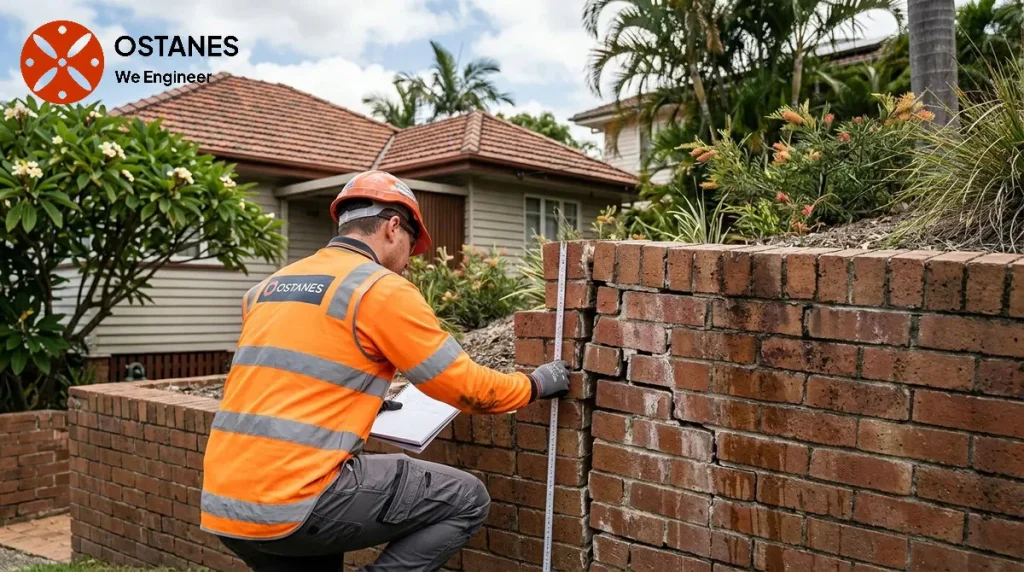
Brick retaining-wall cracks need to be considered with leaning, displacement, drainage and the retained ground. Repointing a visible joint may not address the cause of continuing movement.
Possible causes of cracking or leaning
Visible symptoms such as leaning or cracks in masonry retaining wall construction can stem from various sources, making a precise diagnosis dependent on a thorough site assessment. The same observable issue, like a diagonal crack, might be associated with different underlying conditions, including lateral earth pressure, inadequate drainage, subgrade settlement, or reinforcement corrosion.
Lateral earth pressure and wall movement
Retaining walls are designed to hold back soil and other materials, which exert lateral pressure against the wall face. Over time, or due to changes in site conditions such as additional weight placed behind the wall, this pressure can increase. When the lateral earth pressure exceeds the wall’s capacity, it may lead to brick retaining wall leaning, displacement, or cracking as the structure attempts to accommodate the forces acting upon it.
Drainage, water and pressure behind the wall
Water accumulation behind a brick retaining wall can significantly increase the pressure exerted on it. When drainage systems are absent, inadequate, or become blocked, water saturates the soil, making it heavier and less stable. This added hydrostatic pressure can contribute to the wall moving forward, bulging, or developing cracks. Evidence of efflorescence, dampness, or water seepage through or around the wall can be a sign of moisture-related issues contributing to wall distress.
Subgrade settlement and uneven support
A brick retaining wall requires stable and consistent support from the ground beneath it. If the subgrade soil settles unevenly or undergoes changes in its bearing capacity, the wall’s foundation can shift. This differential settlement may contribute to uneven brick wall movement, leading to diagonal or stepped cracks in the masonry, or a noticeable lean as one part of the wall sinks more than another. Changes in soil moisture content, nearby excavation, or inadequate compaction during construction are potential contributors to subgrade settlement.
Reinforcement corrosion and masonry deterioration
For brick retaining walls that incorporate internal steel reinforcement, corrosion of this steel can be a contributing factor to cracking and deterioration. As steel rusts, it expands, creating internal pressure that can crack the surrounding masonry. This process is often associated with moisture ingress into the wall structure. Additionally, the deterioration of mortar joints or individual bricks due to weathering or material defects can weaken the wall, making it more susceptible to cracking or leaning under pressure.
Warning signs that warrant professional assessment
Observing specific patterns and changes in and around a brick retaining wall can indicate movement or deterioration, suggesting the need for a professional assessment. These observations include:
- Crack Location and Pattern: Cracks appearing in diagonal or stepped patterns within the mortar joints, or horizontal cracks along the wall. Vertical cracks might also appear. The location of these cracks, whether near the base, top, or mid-span, can provide clues.
- Crack Direction and Displacement: Cracks that are wider at one end than the other, or where one side of the crack is offset from the other. This suggests movement beyond simple shrinkage.
- Leaning or Bulging: A noticeable lean of the wall away from the retained material, or a bulge in the wall face, indicates significant movement.
- Moisture-Related Evidence: Persistent dampness, efflorescence (white powdery deposits), or active water seepage through the wall or at its base.
- Damaged Masonry: Spalling (flaking or chipping) of bricks, crumbling mortar, or sections of the wall appearing to dislodge.
- Changes Around the Wall: Gaps forming between the wall and the retained soil, lifting of paving or garden beds adjacent to the wall, or changes in nearby ground levels.
Pronounced movement, rapidly developing cracks, or any concern regarding the immediate stability of the wall should prompt a prompt professional inspection.
What observations can and cannot establish
While visual observations and photographs are valuable tools for documenting visible symptoms like brick wall movement or cracking, they have limitations. Photographs can effectively record the appearance of a crack or the extent of a lean at a specific point in time, aiding in monitoring changes. However, visual documentation alone cannot definitively establish the underlying cause of the distress, the rate of movement, the structural integrity of the wall, or whether it poses a safety risk. An engineering diagnosis requires an on-site inspection, often involving a detailed examination of the wall’s construction, drainage conditions, surrounding soil, and site context.
Queensland context and professional assessment
In Queensland, building work, including some retaining walls, may fall under specific regulations. For instance, the definition of assessable building work for retaining walls can be found under the Building Act 1975. Property owners often consider the requirements when a retaining wall is near boundaries, and some provisions are outlined in the Queensland Development Code. When assessing issues like brick retaining wall cracking or leaning, we often find that a comprehensive understanding of these contextual factors is beneficial. For a detailed assessment tailored to your property, we offer a
service.
What can cause a brick retaining wall to crack?
A brick retaining wall can crack due to several factors, including excessive lateral earth pressure from the soil it retains, inadequate or blocked drainage leading to water buildup, uneven settlement of the ground beneath the wall, or the corrosion of internal steel reinforcement. Determining the specific cause typically requires a professional assessment.
Does a leaning brick retaining wall always need professional assessment?
A leaning brick retaining wall indicates movement and may require professional assessment. The significance of the lean depends on factors like its extent, the rate of movement, and the wall’s construction. If the lean is pronounced, increasing over time, or accompanied by other signs of distress, a professional inspection is recommended to evaluate its stability and underlying cause.
Can photographs identify the cause of cracks in a masonry retaining wall?
Photographs are useful for documenting the visible symptoms of cracks in a masonry retaining wall, such as their location, pattern, and width. However, they cannot, on their own, identify the underlying cause of the cracks or assess the structural integrity and safety of the wall. An on-site inspection by a qualified professional is generally necessary for a proper diagnosis.
Distinguish surface mortar damage from wall movement
Record whether cracking is confined to joints, passes through bricks or accompanies leaning, bulging or separation. Note the retained height, nearby loads and any blocked or leaking drainage visible without excavation. Repointing alone may conceal an unresolved structural or drainage problem. An assessment can determine whether the evidence supports monitoring, further investigation or designed remedial work. Do not excavate behind the wall or remove bricks to inspect its construction without professional direction.
Related property guidance
For background on the related issue, read concrete sleeper retaining-wall design and condition. Use it alongside the project-specific evidence and service scope described in this guide.
Discuss your project with Ostanes Engineering
For an existing wall showing cracking or movement, begin with structural inspection. If repair or replacement requires a new structural solution, retaining-wall engineering can be scoped separately once the condition and site constraints are understood.
Complete the contact form with your property location, the concern or proposed work, safe photographs and any available drawings, soil report or earlier reports. Contact us through the form for a project-specific cost estimate. The team will respond as soon as possible.
Official references and further reading
For the relevant regulatory or maintenance context, consult Brisbane retaining-wall guidance and QBCC home maintenance. These resources complement the project-specific advice described above.
