
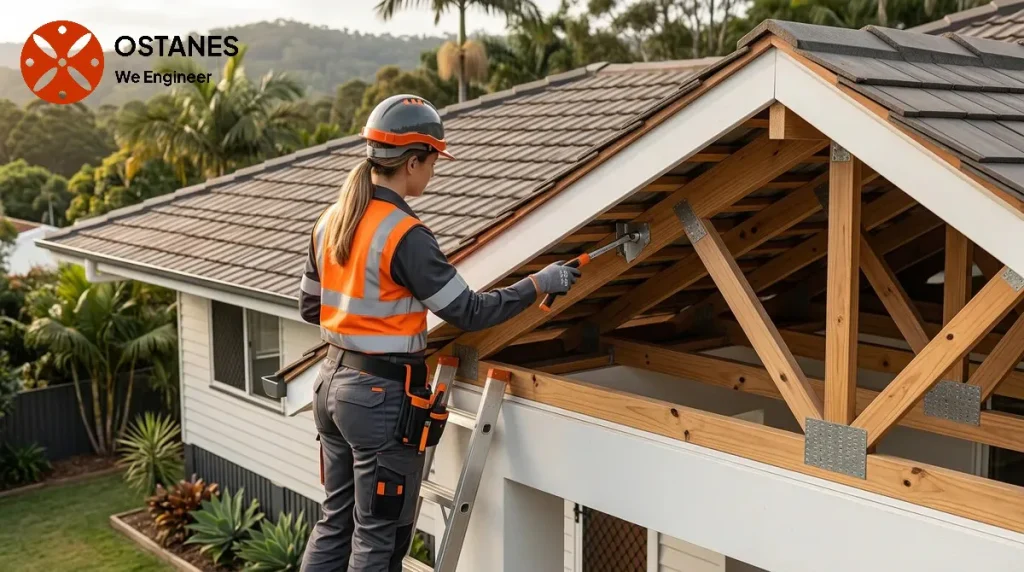
A roof structural assessment can investigate concerns about members, connections, supports or changed loads. Safe access and available drawings determine what can be assessed and whether further evidence is needed.
When a roof structural assessment may be needed
Several situations can signal that a roof structural assessment is appropriate. These are not necessarily indicators of a defect but rather triggers for a professional review to understand the roof’s condition and capacity. For example, planning to install heavy solar panels or considering a change from a lighter tin roof to heavier tiles can introduce new loads that the existing structure may need to accommodate. Similarly, experiencing cyclone or storm damage can affect the integrity of a roof, even if visible damage seems minor. Even subtle observations, such as a visible ridge sag or other signs of roof movement, may indicate an underlying issue that warrants investigation. In each case, an assessment provides clarity on the roof’s structural adequacy for its current or intended purpose.
Before installing solar or changing the roof covering
When planning significant alterations to your roof, such as installing solar panels or replacing existing tin roofing with tiles, a structural assessment can be a prudent step. Solar panel installations add considerable weight to a roof, and the existing roof framing needs to be able to support this additional load safely. Similarly, replacing a lightweight tin roof with heavier tile roofing significantly changes the load distribution and overall weight on the roof structure. Before proceeding with such projects, an assessment can help confirm that the roof structure is capable of supporting these increased demands without undue stress.
When storm or cyclone damage changes the decision
Queensland’s weather conditions mean that roofs are frequently exposed to severe storms and cyclones. Even if no immediate obvious damage is visible after such an event, high winds, heavy rain, or impacts from debris can compromise a roof’s structural integrity. If you suspect your roof has sustained damage, or if you notice new leaks or changes in the roof’s appearance post-storm, a prompt assessment can be beneficial. In the context of insurance, the Insurance Council of Australia advises that structural damage following a storm may require professional assessment as part of the claims process. For acute concerns or suspected serious damage following a storm, it is advisable to seek immediate professional inspection.
What to record before seeking assessment
Before seeking a professional assessment, documenting your observations can provide valuable context for the engineer. Focus on factual details without attempting to diagnose the cause. Note the exact location of any visible concerns on the roof, when you first noticed them, and whether they appear to have changed over time. Record any recent work performed on the roof or nearby, such as renovations, tree removal, or changes to drainage. Document recent weather events, especially significant storms or heavy rainfall, that might correlate with the observations. Take clear photographs from a safe vantage point, such as ground level, capturing the area of concern and the overall roof. This information supports a thorough professional review but should not be used for self-diagnosis.
Queensland professional and insurance context
In Queensland, the practice of engineering, including structural assessments, is regulated. The Professional Engineers Act 2002 (Qld) governs the registration of engineers, ensuring they meet professional standards. A Registered Professional Engineer of Queensland (RPEQ) holds specific qualifications and is accountable for their engineering work. The Board of Professional Engineers of Queensland (BPEQ) oversees the registration and regulation of RPEQ engineers. When engaging an engineer for a roof structural assessment, verifying their RPEQ registration ensures they are qualified to provide such services in Queensland. In an insurance context, particularly after storm damage, an insurer may require an engineering report to assess the extent and cause of damage for claims purposes. The specific requirements for such reports can vary and are often guided by the insurer’s policies, sometimes aligning with guidance from bodies like the Insurance Council of Australia.
When do I need a roof structural assessment?
You may need a roof structural assessment if you are planning to add significant weight to your roof, such as solar panels, or if you intend to change to a heavier roof covering. It is also advisable after significant storm or cyclone damage, or if you notice visible changes like a ridge sag or other unexplained roof movement.
Do I need an assessment before installing solar panels?
Installing solar panels adds extra weight to your roof structure. An assessment can help determine if your existing roof framing is capable of supporting this additional load safely before the installation proceeds.
Should storm or cyclone damage prompt a roof frame structural inspection?
Yes, suspected structural damage from a storm or cyclone can warrant prompt professional attention. An engineering assessment can help evaluate the extent and nature of any damage, which can also be relevant for insurance claims as guided by the Insurance Council of Australia.
Does a visible ridge sag prove the roof has structural damage?
A visible ridge sag suggests that further investigation is warranted. However, it does not automatically prove the cause or specific condition of your roof from description or photographs alone. A professional assessment is needed to determine the underlying reason.
Does changing from tin roofing to tile roofing require assessment?
Changing from a lighter tin roof to heavier tiles can significantly increase the load on your roof’s existing structure. An assessment can confirm whether the roof framing is adequate to support this increased weight before the new roofing is installed.
Describe the roof concern and any changes in loading
Provide photographs taken safely from ground level, available roof drawings and details of leaks, alterations or added equipment. A roof assessment may examine accessible members, supports and connections, with limitations where elements are concealed. Do not climb onto a suspect roof or assume a sound roof covering proves the framing is adequate. Ask whether further access, records or testing are needed and whether the next step is repair design, maintenance by a trade or monitoring of an identified issue.
Discuss your project with Ostanes Engineering
For help with the structural questions in this guide, discuss roof structural assessment with Ostanes Engineering. structural engineering design may also be relevant where the assessment or proposal identifies that need. Agree on the scope, evidence and deliverables before commissioning additional work.
Complete the contact form with your property location, the concern or proposed work, safe photographs and any available drawings, soil report or earlier reports. Contact us through the form for a project-specific cost estimate. The team will respond as soon as possible.
Official references and further reading
For the relevant regulatory or maintenance context, consult Queensland approvals and inspections and QBCC home maintenance. These resources complement the project-specific advice described above.
