
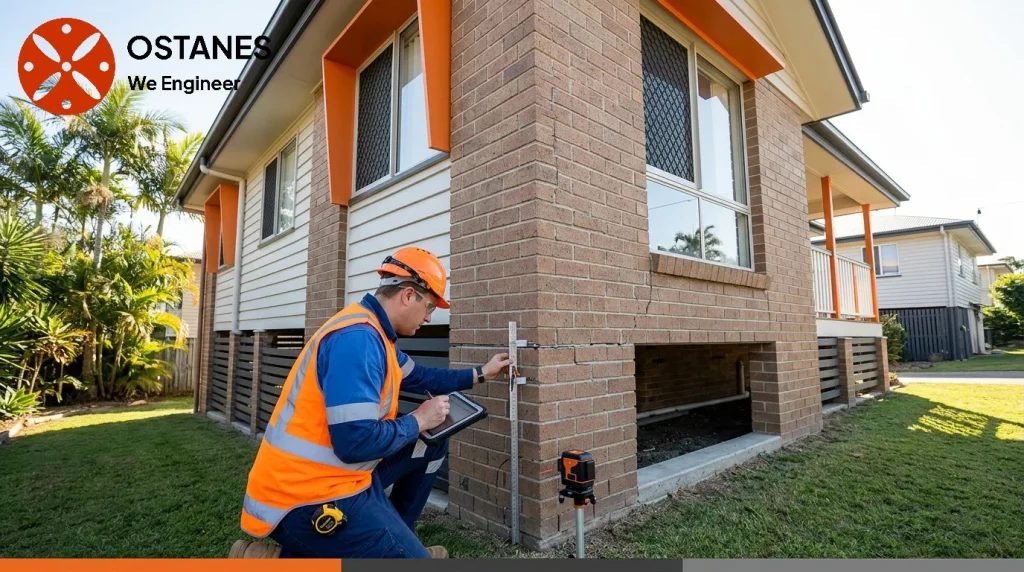
The label ‘house settling’ does not establish that movement is harmless. Assess whether the symptoms are old and stable, seasonal or newly progressing, and investigate the building’s actual support conditions.
What normal house settling can look like
Normal house settling can manifest in various minor ways as a building adjusts to its environment and the ground beneath it. These signs might include hairline cracks in plaster or drywall, particularly around door and window frames, that remain stable over time. Slight imperfections in how doors or windows operate, such as minor sticking, may also occur. These observations often appear within the first few years after construction and do not typically progress in severity or width. The key characteristic of normal house settling is its limited nature; the movement tends to be minimal, non-progressive, and widely distributed rather than concentrated in one area. Such signs do not imply structural distress but reflect the building’s gradual accommodation to its site conditions.
Patterns that warrant closer assessment
Certain patterns of movement can indicate that a building requires closer professional attention beyond what might be considered normal settling. These include cracks that are wide, appear suddenly, or show signs of ongoing widening. Stair-step cracks in brickwork, visible displacement of building elements, or significant leaning of walls may also be concerning. Other signs that warrant assessment are doors or windows that jam severely or no longer fit their frames, floors that noticeably slope or become uneven, and gaps forming between walls and ceilings or floors. When multiple symptoms appear together, or if existing issues worsen over time, it suggests a need for an RPEQ-qualified structural engineer to evaluate the situation on-site.
Timeline and change: settlement versus ongoing movement
The timeline over which symptoms develop and whether they change are critical factors in understanding foundation movement vs settlement. Normal house settling typically occurs within the first few years after construction and then stabilises, meaning any cracks or minor misalignments do not worsen. In contrast, ongoing foundation movement often presents with symptoms that appear much later, continue to develop, or show progressive widening or displacement. Observing whether a crack remains stable or visibly changes month-to-month provides important context. A pattern that is active and evolving, rather than static, suggests that the underlying cause may still be active and warrants further investigation, regardless of how long the building has been in place.
Comparing symptoms without diagnosing cause
Understanding the difference between house settling and foundation problems often comes down to interpreting observable symptoms in context. Fine, stable hairline cracks in plaster might be consistent with signs of house settlement. However, wider cracks, particularly those that extend through brickwork in a stair-step pattern, or cracks that are noticeably widening, can indicate more significant movement. Doors and windows that stick slightly could be minor settlement, but those that jam severely or visibly pull away from their frames might point to foundation issues. Floors with minor undulations may be within acceptable tolerances, but significant slopes or noticeable unevenness can be a sign of differential foundation movement. Gaps forming at wall-to-ceiling or wall-to-floor junctions, especially if they are widening, suggest ongoing movement. While these observations provide valuable clues, they cannot, on their own, diagnose the underlying cause or structural integrity of a building; they are indicators that contribute to an engineer’s assessment.
Queensland context and footing performance
In Queensland, soil conditions and climatic factors play a significant role in footing performance, influencing how a building might settle or move. Highly reactive clay soils, common in many parts of Queensland, expand when wet and shrink when dry. This can lead to ground movement that affects foundations. Prolonged dry spells followed by heavy rainfall, typical of Queensland’s climate, can cause significant moisture fluctuations in these soils. The performance of residential slabs and footings in such conditions is guided by standards like AS 2870, which addresses design and construction on reactive sites. Understanding how local soil types and weather patterns interact with a building’s foundations is crucial when interpreting signs of movement, as it can help explain why certain patterns emerge or worsen.
Is normal house settling always harmless?
While minor settling is common and often benign, it is not possible to guarantee that any specific pattern of movement is harmless without an on-site assessment. If you observe changes, new cracks, or symptoms that concern you, professional evaluation is advisable.
What is the difference between foundation movement and settlement?
Settlement generally refers to the initial, usually limited downward movement of a building into the ground, often occurring shortly after construction. Foundation movement can be a broader term referring to any shift or change in the foundation, which may be ongoing, progressive, and potentially indicative of issues such as reactive soil behaviour, inadequate footings, or other site-specific factors.
Which signs of house settlement should I pay attention to?
Pay attention to cracks that are wide, appear suddenly, continue to widen, or form distinctive patterns like stair-stepping in brickwork. Also note doors and windows that jam significantly, noticeably sloping floors, or gaps forming between walls and ceilings or floors, especially if these worsen over time.
Can photographs confirm a foundation problem?
Photographs can document the appearance of cracks or other symptoms and show changes over time, which can be useful for an engineer. However, photographs alone cannot confirm a foundation problem or provide a definitive diagnosis. An on-site inspection is necessary to assess the full context and underlying causes.
When should I seek an engineering assessment?
You should seek an engineering assessment if you observe significant or worsening cracks, doors or windows that no longer function correctly, noticeably uneven floors, or multiple related symptoms. Any rapid changes or concerns about structural integrity also warrant immediate professional inspection.
Use a timeline to test the settling explanation
The age of a house does not make new movement harmless. Collect dates of extensions, drainage alterations, drought or heavy-rain periods, nearby construction and previous crack repairs. Check whether symptoms are stable, seasonal or progressively worsening. The report should explain which observations support an interpretation and which remain uncertain. Avoid treating the phrase ‘normal settling’ as a diagnosis: a useful assessment links the movement pattern to the building’s actual support system and identifies when monitoring or further investigation is needed.
Related property guidance
For background on the related issue, read foundation movement in Queensland. Use it alongside the project-specific evidence and service scope described in this guide.
Discuss your project with Ostanes Engineering
For help with the structural questions in this guide, discuss structural crack and movement report with Ostanes Engineering. structural inspection may also be relevant where the assessment or proposal identifies that need. Agree on the scope, evidence and deliverables before commissioning additional work.
Complete the contact form with your property location, the concern or proposed work, safe photographs and any available drawings, soil report or earlier reports. Contact us through the form for a project-specific cost estimate. The team will respond as soon as possible.
Official references and further reading
For the relevant regulatory or maintenance context, consult QBCC home maintenance and CSIRO foundation maintenance. These resources complement the project-specific advice described above.
