
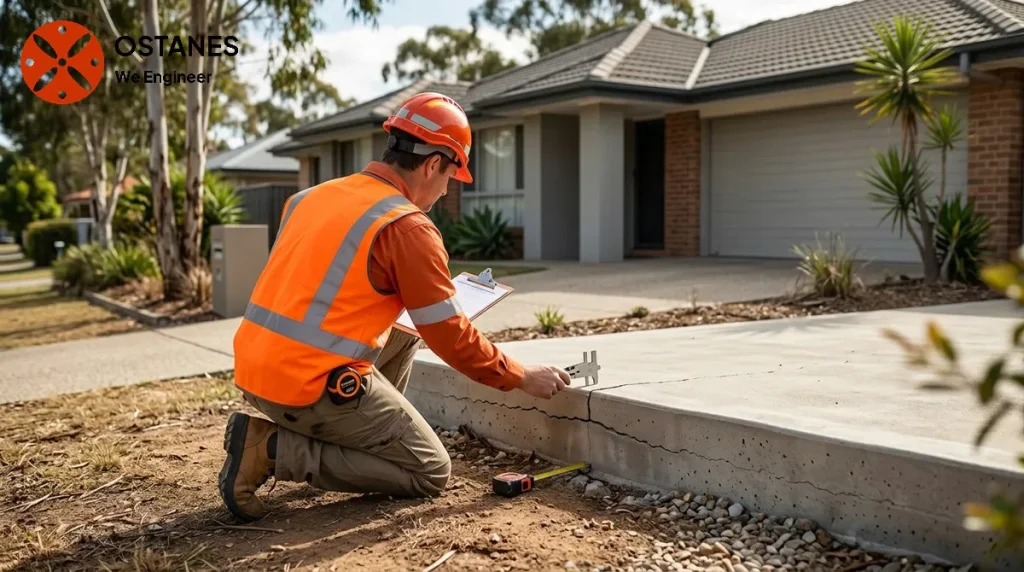
A structural engineer can assess the building’s response to foundation concerns, with geotechnical or drainage specialists involved where needed. Choose the investigation around the problem and available evidence.
Who checks foundation problems?
Identifying the correct professional to assess foundation problems hinges on whether you require observation of visible defects, input on building practices, or an engineering interpretation of structural implications. A pre-purchase building inspector can report on general condition and visible issues, a licensed builder can offer insights into construction and potential building work, but a structural engineer is specifically qualified to assess the underlying causes of foundation movement and evaluate its structural significance. When the question moves beyond visible signs to potential structural issues, an engineering assessment becomes appropriate for understanding the problem’s scope and potential impact.
What a structural engineer can establish
A structural engineer, particularly one registered as a Registered Professional Engineer of Queensland (RPEQ), assesses foundation movement by examining evidence of settlement, heave, or other ground-related issues. This assessment considers the building’s structural framework, the soil conditions, and the patterns of observed damage. An engineer can interpret how various factors, including soil reactivity, drainage, and tree roots, may contribute to foundation issues. They apply engineering principles to determine if observed conditions indicate significant structural distress and to understand the likely causes. This includes referencing standards like the AS 2870 standard, which provides guidance on residential slabs and footings, to inform their assessment of foundation performance. Suspected structural movement or acute-risk conditions require an on-site RPEQ assessment.
What a licensed builder can establish
A licensed builder brings practical construction experience to the assessment of foundation problems. They can identify visible damage, understand how certain building practices might contribute to issues, and offer insights into potential remediation from a construction perspective. Builders are knowledgeable about building components and construction sequences, which helps them recognise general defects and wear. However, their primary role is in construction and rectification, not in structural diagnosis. While a builder can provide valuable input on the observable condition of a building and the feasibility of certain repairs, their assessment does not typically extend to the in-depth engineering analysis required to determine the structural significance or underlying causes of foundation movement.
What a building inspector can establish
A pre-purchase building inspector conducts visual assessments of properties to identify observable defects and overall condition. Their reports typically cover a range of issues, from minor maintenance items to significant structural defects visible at the time of inspection. They play a crucial role for property buyers by highlighting areas of concern that may require further investigation. While a building inspector can report on visible signs of foundation movement, such as cracking in walls or uneven floors, their report is generally limited to what is visually apparent. Establishing the specific cause of foundation movement, its structural implications, or prescribing engineering solutions falls outside the typical scope of a building inspection. An inspector’s observations may indicate the need for a specialist’s assessment, such as that of a structural engineer, to interpret the findings and provide a diagnosis.
How Queensland credentials fit the choice
Ask who is responsible for the professional engineering service and how Queensland registration requirements are met, including any applicable lawful supervision arrangements. Check the responsible individual’s current registration and relevant area of engineering through BPEQ.
Who diagnoses foundation issues?
A structural engineer is the professional qualified to diagnose the underlying causes of foundation issues. While building inspectors and builders can observe and report visible signs, an engineer performs the assessment required to interpret those signs in a structural context and determine the probable cause.
Should I contact a structural engineer, builder or building inspector first?
The best first contact depends on your specific needs. For a general pre-purchase assessment, start with a building inspector. If you’re planning renovations or need construction advice, a builder is appropriate. For concerns about structural integrity or persistent foundation movement, a structural engineer should be your first call for a diagnostic assessment.
Can a building inspector confirm that foundation movement is structural?
A building inspector can report on visible signs of foundation movement, such as cracks in walls or uneven floors. However, confirming whether this movement is structural, determining its cause, or assessing its long-term implications typically requires the expertise of a structural engineer. Building inspectors generally recommend further investigation by an engineer if significant movement is observed.
Can a builder assess foundation problems?
A builder can assess foundation problems from a construction perspective, identifying visible damage and potential impacts on building components. Their experience is valuable for understanding constructability and potential repair approaches. However, a builder’s assessment does not substitute for the engineering analysis needed to diagnose structural issues or determine the root cause of foundation movement.
When should foundation movement receive prompt professional attention?
Foundation movement should receive prompt professional attention if you observe sudden, rapidly worsening cracks, significant distortion of door or window frames, noticeable unevenness in floors, or if any movement appears to compromise the stability of the building. These signs may indicate an active structural issue that requires immediate engineering assessment.
Match each part of the problem to the right specialist
A structural engineer assesses the building’s structural behaviour; a geotechnical consultant may investigate the ground, and a plumber or drainage specialist may address leaks and water management. Existing reports help define which expertise is needed rather than commissioning unrelated investigations. Ask who is responsible for the professional engineering service and how the relevant Queensland registration requirements are met. Do not assume that a contractor’s proposed repair method is itself a diagnosis of the foundation problem.
Related property guidance
For background on the related issue, read foundation movement in Queensland. Use it alongside the project-specific evidence and service scope described in this guide.
Discuss your project with Ostanes Engineering
For help with the structural questions in this guide, discuss structural inspection with Ostanes Engineering. structural crack and movement report may also be relevant where the assessment or proposal identifies that need. Agree on the scope, evidence and deliverables before commissioning additional work.
For a project-specific cost estimate, complete the contact form with your property location, the concern or proposed work, safe photographs and any available drawings, soil report or earlier reports. The team will respond as soon as possible.
Official references and further reading
For the relevant regulatory or maintenance context, consult BPEQ registration and QBCC subsidence guidance.
