
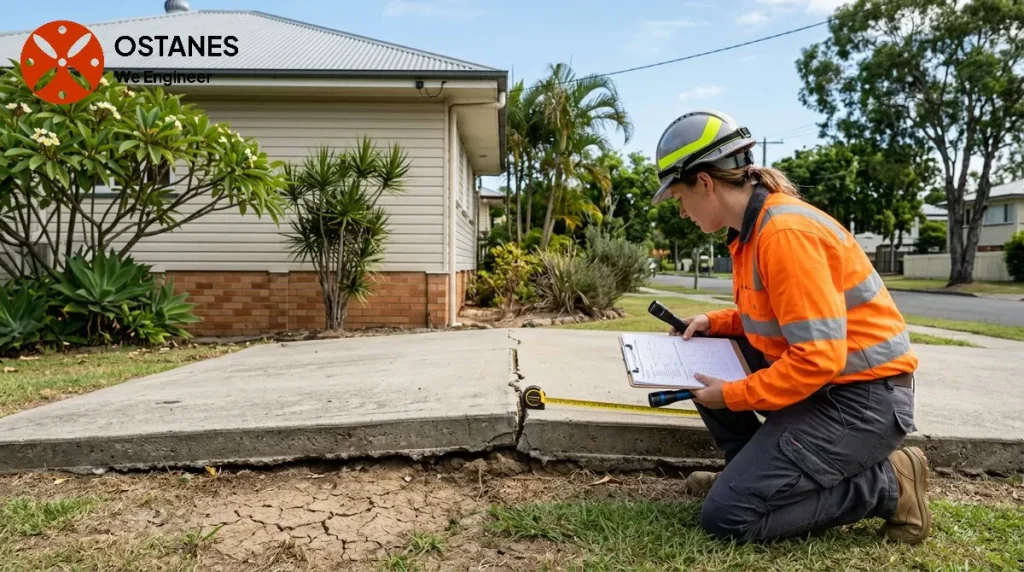
Foundation heave involves upward movement, but visible symptoms can overlap with other mechanisms. Assess the movement pattern, support system and ground evidence before choosing a repair.
Foundation Heave Compared with Settlement and Subsidence
Foundation heave involves an upward displacement of the ground or slab. This movement contrasts with settlement and subsidence, which both describe downward movements. Settlement typically refers to the compaction of soil under the building’s weight, leading to a uniform or differential lowering. Subsidence often implies a larger-scale downward movement due to factors like soil erosion, underground voids, or significant changes in the water table. While all these forms of ground movement can manifest as visible cracks or unevenness in a building, the underlying cause and direction of movement differ significantly. Interpreting these signs correctly requires professional assessment, as similar patterns of damage can arise from different mechanisms.
Possible Causes of Foundation Heave in Queensland Homes
Several factors can contribute to foundation heave, particularly in Queensland’s conditions. One common factor is the rehydration of reactive clay soils. When these soils dry out, they shrink, and when exposed to moisture again, they expand. This expansion can exert upward pressure on foundations or slabs. Plumbing leaks, such as a broken pipe under a slab or near footings, can locally saturate the soil, leading to expansion and subsequent heave. Similarly, the removal of large trees from a site before or after construction can alter soil moisture levels. Tree roots absorb significant amounts of water, and their removal can cause the soil to become wetter, promoting clay expansion and potential upward movement. These factors act as conditional contributors, meaning their presence may increase the likelihood of heave but do not definitively prove it as the cause of observed movement without further investigation.
Queensland Soil, Rainfall and Site History
The unique geological and climatic conditions in Queensland play a significant role in how ground movement, including slab heave Queensland properties might experience, is understood. Much of Queensland, particularly in urban areas, features reactive clay soils. These soils are prone to significant volume changes with varying moisture content, making them susceptible to both shrinkage during dry periods and expansion during wet periods. Rainfall patterns, which can involve prolonged dry spells followed by intense wet seasons, directly influence soil moisture. Changes in drainage, landscaping or even the removal of trees can alter the soil moisture balance around a building. To understand the broader climate context, official data from the Bureau of Meteorology can offer insights into regional rainfall and drought conditions. Similarly, general residential slab and footing practices, often guided by standards such as AS 2870 Residential Slabs and Footings, acknowledge the challenges posed by reactive soils. However, no specific clauses, tables or numeric values from this standard should be quoted without direct verification of the current official source. A property’s site history, including past land use and any alterations to drainage or vegetation, also provides crucial context when assessing ground movement.
Ground Heave Signs to Observe
Recognising potential ground heave signs involves observing specific patterns within and around your home. Internally, you might notice cracks appearing in plasterboard walls or ceilings, particularly in an inverted ‘V’ shape near wall-ceiling junctions, or cracks that taper from ceiling height down towards the floor. Floors may become uneven or seem to dome upwards in certain areas. Doors and windows might begin to stick, indicating that their frames have distorted due to movement. Externally, look for cracks in brickwork or concrete slabs, particularly those that appear above ground level. Localised signs near potential moisture sources, such as areas where plumbing leaks might occur or where large trees have been removed, can also be relevant. These observations indicate movement, but cannot confirm foundation heave. Other causes can produce similar symptoms.
Is foundation heave the same as subsidence?
No, foundation heave is not the same as subsidence. Foundation heave refers to the upward movement of soil or a building’s foundation, typically due to soil expansion. Subsidence, on the other hand, describes downward movement or sinking of the ground. While both can cause damage to structures, the direction and underlying causes of movement differ.
What causes foundation heave in Queensland homes?
Foundation heave in Queensland homes is often linked to changes in soil moisture, particularly in reactive clay soils. Possible contributors include rehydration of dried-out clay, prolonged plumbing leaks saturating the soil, or the removal of established trees that previously drew significant moisture from the ground.
Can cracks prove foundation heave?
Cracks and other visible signs like uneven floors or sticking windows can indicate ground movement, but they do not definitively prove foundation heave. Similar patterns of damage can result from settlement, subsidence, or other structural issues. An on-site engineering assessment is necessary to determine the cause and significance of any observed cracks.
What should I do if I notice possible ground heave signs?
If you notice signs that may indicate ground heave or any other structural movement, it is advisable to seek an on-site assessment from a qualified structural engineer. They can inspect the property, evaluate the signs, and provide expert advice based on direct observation.
Distinguish heave from other forms of movement
An upward or uneven floor movement pattern requires assessment of the building and ground conditions, not an assumption based on one crack. Collect level information if available, drainage history and the soil report. Heave and settlement can produce overlapping visible symptoms, and multiple mechanisms may be involved. The investigation should state which evidence supports the interpretation and whether monitoring or geotechnical testing is needed. Repair selection should follow that assessment rather than treating underpinning as a default response.
Related property guidance
For background on the related issue, read foundation movement in Queensland. Use it alongside the project-specific evidence and service scope described in this guide.
Discuss your project with Ostanes Engineering
Ostanes Engineering offers a structural crack and movement report to assess the reported symptoms and identify appropriate next steps. If the findings justify new foundations or remedial structural design, foundation structural engineering can be discussed as a separate scope; it is not assumed to be necessary for every crack.
For a project-specific cost estimate, complete the contact form with your property location, the concern or proposed work, safe photographs and any available drawings, soil report or earlier reports. The team will respond as soon as possible.
Official references and further reading
For the relevant regulatory or maintenance context, consult CSIRO foundation maintenance and QBCC subsidence guidance.
