
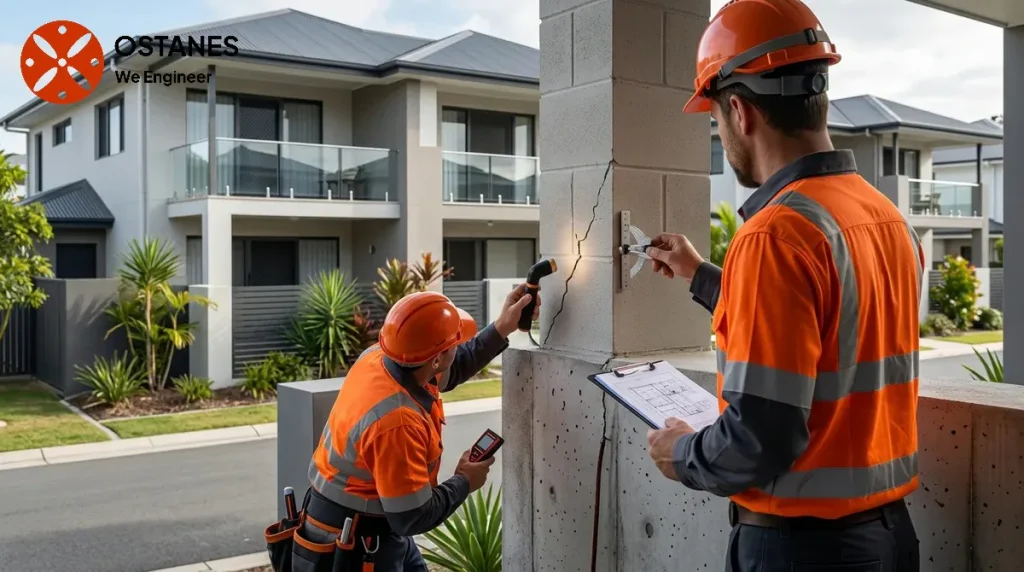
Short answer: in a Queensland building defects dispute, an independent structural engineer’s report records what is wrong, why it matters structurally, and what rectification is needed, in a form other parties can test. Most residential disputes go to the QBCC first, and QCAT generally will not accept a building dispute application until the QBCC process has been used. An early report helps you describe structural items clearly within the QBCC time limits and gives you evidence to rely on if the matter reaches the tribunal.
Important: this guide explains how engineering evidence is commonly used. It is not legal advice. Time limits, eligibility and procedure depend on your contract and circumstances, so get advice from a lawyer and confirm current requirements with the QBCC and QCAT before acting.
Where an engineer’s report fits in the Queensland process
For defective residential building work, the QBCC describes a sequence that owners are expected to follow. In simplified form:
- Notify the contractor in writing. List every defective or unfinished item and give a reasonable timeframe to fix them (the QBCC gives 14 days as an example).
- Lodge a defective work complaint with the QBCC if the items are not fixed.
- QBCC facilitation. A Resolution Services officer contacts both parties and may arrange for the contractor to inspect and agree repairs.
- QBCC inspection. For unresolved items, a QBCC Building Inspector may carry out a visual inspection.
- Outcome letter. If the dispute is not resolved, or you are not eligible for the QBCC service, the QBCC issues a letter. According to the QBCC’s page on applying to QCAT, lodging with the QBCC is a mandatory first step and that letter is needed to start a building dispute at QCAT.
An independent engineering report can be useful at more than one point: to write a precise defects notice, to support the complaint, to respond to the contractor’s position at the site meeting, and later as expert evidence.
Why an independent report as well as the QBCC inspection?
The QBCC inspection and an independent engineering report do different jobs.
| QBCC Building Inspector | Independent structural engineer | |
|---|---|---|
| Role | Regulator’s dispute resolution process | Technical expert engaged to answer defined questions |
| Method | Visual inspection of disputed items | Scope agreed: inspection, measurements, document review, calculations or testing where agreed |
| Focus | Whether items are defective and who should rectify | Structural cause, significance and rectification scope |
| Timing | After a complaint is lodged | Any time, including before notifying the builder |
The QBCC itself says its dispute resolution service should not be used in place of seeking your own independent building inspection, building advice or legal advice. For structural items such as footing movement, cracked slabs, overloaded beams or failing retaining walls, the independent adviser is usually a structural engineer.
Time limits that make an early report worth having
The QBCC separates structural and non-structural defects, and the difference affects time limits. Under the QBCC home warranty rules for defective work:
- Structural defects: for policies taken out since 28 October 2016, cover extends for 6 years and 6 months from the earliest of the contract date, the premium payment date or the start of work, and a complaint must be lodged within 3 months of noticing the defect.
- Non-structural defects: cover extends for 6 months from completion, and the complaint must be lodged within 7 months of completion.
Because the three-month window for structural defects starts when you notice the problem, waiting for a full investigation before lodging can be risky. An engineer can give an early written opinion on which items appear structural, then carry out further investigation if the matter continues. Confirm your own dates with the QBCC or your lawyer.
What a structural defects expert report usually contains
A report written for a dispute is more detailed than a routine inspection report, because other experts and the tribunal will test it. Typical contents:
- the instructions and the questions the engineer was asked to answer;
- the documents reviewed: contract drawings, engineering drawings, certificates, correspondence, earlier reports;
- a chronology of when defects appeared and what repairs were attempted;
- observations with photographs, crack mapping, measurements and level readings;
- any testing or opening-up that was agreed, and its results;
- an assessment of each item: whether it is a structural concern, the probable mechanism, and the alternatives considered;
- the rectification scope the engineer considers necessary;
- the limits of the opinion, including anything that could not be inspected.

Rectification costs are normally priced by a builder or a quantity surveyor using the engineer’s scope. For how a forensic engagement is run step by step, read how a forensic structural investigation works.
Independence and the rules for experts
An expert report is only useful if it is independent. The engineer’s job is to give an honest technical opinion on the questions asked, including the parts that do not help the party paying for it. A report that reads like advocacy is easy to discredit.
QCAT publishes its own practice direction on expert evidence and guidance for experts in building disputes, and it may ask experts on each side to confer and identify where they agree. Your lawyer can tell you which requirements apply to your matter; give them to the engineer at the start so the report is prepared in the right form.
Design faults are a different complaint
Not every problem is a construction defect. Where the fault appears to be in the plans themselves, the QBCC has a separate building design dispute path. You must first raise the concerns in writing with the building designer and give them a reasonable time to respond. The QBCC may then inspect and provide a report you may be able to use at QCAT or the Magistrates Court. A structural engineer can review drawings and the as-built work to help separate design issues from workmanship issues.
How long does a defects report take?
There is no standard timeframe. It depends on how many items are disputed, how quickly documents arrive, access to the property, and whether testing or opening-up is needed. Tell the engineer about any deadlines when you first make contact, so the scope can be staged if needed: for example, a short preliminary opinion first, then the full report.
How to brief the engineer
- A list of the defects in dispute, in the same order as your notice to the contractor or your QBCC complaint.
- The contract, plans, engineering drawings and any Form 15 or Form 16 certificates.
- Correspondence with the builder, the QBCC and insurers.
- Any earlier inspection reports, including the builder’s or the QBCC’s.
- Photos with dates showing how the defects have changed.
- Your lawyer’s instructions, if one is involved.
Once you have the report, the guide on how to read a structural engineer report explains its sections and wording.
QBCC and QCAT expert report questions
Do I need an engineer’s report before lodging a QBCC complaint?
The QBCC does not list one as a requirement. For structural items, a report helps you describe the problem accurately and gives you an independent view before the site meeting with the contractor.
Can a structural engineer act as an expert witness at QCAT?
Yes. Ostanes Engineering’s forensic structural investigation service provides independent RPEQ technical evidence for dispute resolution and QCAT proceedings, within structural engineering. Legal strategy stays with your lawyer.
Will the engineer’s report decide who is responsible?
No. The report gives technical findings on cause and rectification. Responsibility and outcomes are decided through the QBCC process, by agreement, or by the tribunal.
Does this apply to apartments and townhouses?
Bodies corporate can raise defects in common property, but the steps differ. See the guide to building defects for bodies corporate in Queensland.
Facing a defects dispute with structural items? Contact Ostanes Engineering with your defects list, dates and documents, and an RPEQ structural engineer will confirm what can be assessed and how the report can be staged. This page is general information only and is not legal advice.
