
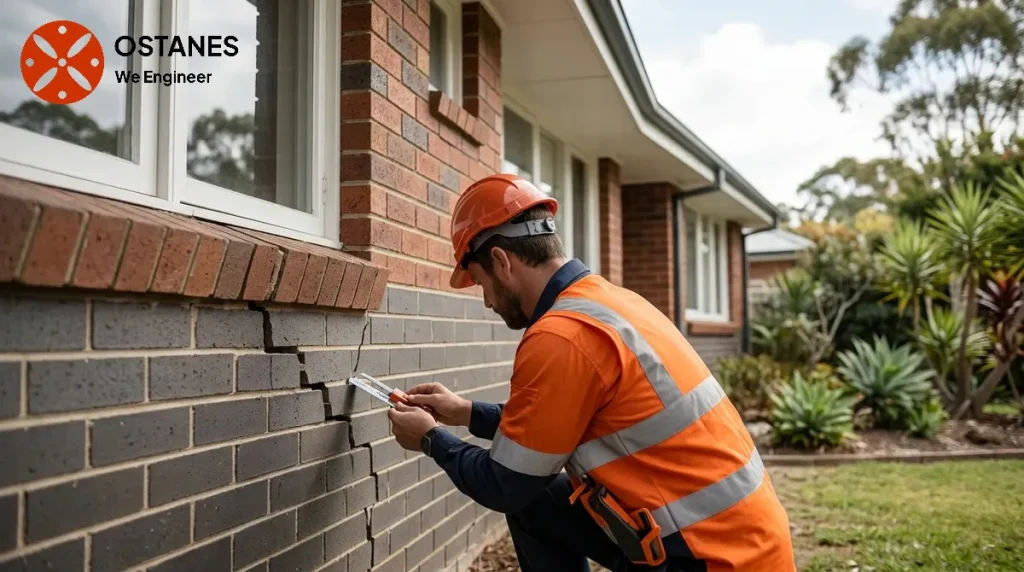
Mine-subsidence concerns in Ipswich require location-specific information. Structural symptoms should be assessed alongside relevant mining and ground records, without assuming that all properties in the city face the same risk.
Why abandoned mine workings may be part of the Ipswich investigation
Ipswich has a history of coal mining, which means some properties in the region might be situated above former underground workings. Over time, these abandoned mine areas can experience ground movement. It is important to distinguish between the general historical context of mining in Ipswich and specific evidence that your property is directly affected. While the presence of historical mine workings in an area can be a factor in an investigation, property-specific information is crucial to determine if such activity is contributing to issues like cracking.
Observable signs and competing explanations
When examining your property, it is helpful to observe the location, pattern, and any associated movement of cracks. Noticing if cracks are widening, shortening, or if parts of the building appear to be settling differently can provide valuable information. These observations, however, are not diagnostic. While they may be consistent with movement from abandoned mine workings, other common factors can cause similar signs. For instance, reactive soils, prevalent in many parts of Queensland, can expand and contract significantly with changes in moisture content, leading to foundation movement. Other causes of cracking can include plumbing leaks, tree root activity, or inadequate building design for local soil conditions. It is important to remember that pictures or written descriptions cannot provide a property-specific diagnosis.
Evidence to gather before assessment
Before an assessment, gathering property-specific information can help in understanding potential causes of cracking or movement. This includes reviewing your property’s history, any available building plans, and previous reports, such as pre-purchase inspections or geological surveys. Dated photographs documenting the progression of cracks over time are particularly useful. For additional context, you may look into Ipswich building information available from sources like the Ipswich City Council, which can sometimes provide insights into local conditions or historical land use. Similarly, current guidance from bodies like the Insurance Council of Australia may offer insights into what evidence is helpful for documenting property damage. It is important to collect this information as evidence to be reviewed by a professional, rather than using it to confirm mine subsidence or any other cause yourself.
Professional context for Queensland homeowners
For homeowners in Queensland seeking professional engineering advice, it is important that any engineer engaged for structural assessments holds RPEQ registration. A Registered Professional Engineer of Queensland (RPEQ) is regulated by the Board of Professional Engineers of Queensland (BPEQ) and is legally authorised to perform professional engineering services in Queensland. The Professional Engineers Act outlines the framework for regulating engineering practice, ensuring that engineers meet specific competency and ethical standards. This registration signifies that an engineer has met the necessary qualifications and experience to provide expert opinions on structural matters.
Can cracking prove that an Ipswich house is affected by mine subsidence?
No, cracking alone cannot definitively prove that an Ipswich house is affected by mine subsidence. While consistent with mine-related movement, cracks can arise from many other factors, requiring a specific property assessment to determine the true cause.
What other causes can resemble mine-related movement?
Other causes that can resemble mine-related movement include changes in reactive soils due to moisture variations, plumbing leaks near foundations, growth of large tree roots, or even initial building settlement.
What information should a homeowner collect before seeking an assessment?
Homeowners should collect property history documents, building plans, any previous inspection reports, and dated photographs showing the development of cracks. Verified local council information or geological reports, if available, can also be helpful.
Can photographs confirm foundation movement in an Ipswich property?
Photographs can document the visible progression of cracks and movement over time, which is very useful evidence. However, they cannot confirm the underlying cause or diagnose the extent of foundation movement in an Ipswich property without an on-site assessment by a qualified engineer.
When should a homeowner seek urgent professional attention?
A homeowner should seek urgent professional attention if they observe sudden, significant, or rapidly worsening cracks, pronounced structural distortion, or any other signs that suggest an acute safety risk to the property.
Check the property’s location against mining information
Historical mining influence is location-specific. Do not assume every Ipswich property has the same subsidence risk or that every crack is mining-related. Gather available mapping, earlier reports, building records and a timeline of movement. A structural assessment evaluates the building’s symptoms; determining ground behaviour may also require geotechnical or mining expertise. If purchasing, ask your conveyancer about relevant searches and disclosures. Any engineering conclusion should state the evidence used and distinguish a suspected mechanism from an established cause.
The Queensland Collingwood Park information information concerns Collingwood Park and its documented mining history. It is a starting point for relevant searches, not a city-wide Ipswich risk classification or an assessment of your building.
Discuss your project with Ostanes Engineering
For help with the structural questions in this guide, discuss structural crack and movement report with Ostanes Engineering. forensic structural investigation may also be relevant where the assessment or proposal identifies that need. Agree on the scope, evidence and deliverables before commissioning additional work.
Complete the contact form with your property location, the concern or proposed work, safe photographs and any available drawings, soil report or earlier reports. Contact us through the form for a project-specific cost estimate. The team will respond as soon as possible.
Official references and further reading
For the relevant regulatory or maintenance context, consult Queensland Collingwood Park information and QBCC subsidence guidance. These resources complement the project-specific advice described above.
