
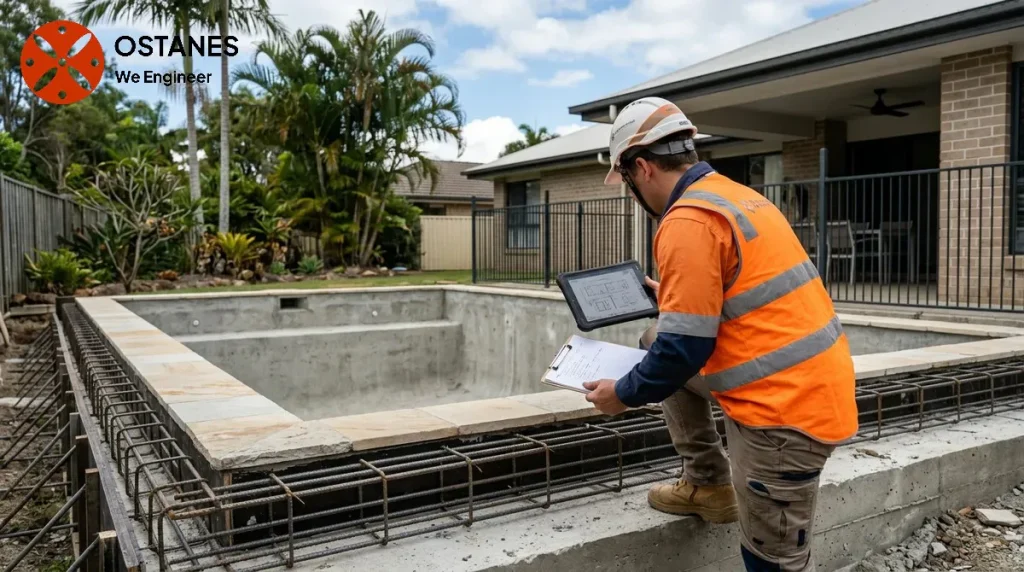
Pool engineering requirements depend on the pool system and site, including ground conditions and nearby structures. Supplier documentation should be coordinated with site-specific design and the approval pathway.
The short answer
Many straightforward swimming pool installations on stable, level ground may proceed with standard designs and certifications provided by pool builders. However, if your property has uncertain ground conditions, is on a sloping block, involves excavation near existing structures, includes or affects retaining walls, or proposes a complex pool shell design, then specialist structural engineering input becomes more likely. These factors introduce variables that move beyond standard construction practices, indicating a potential need for a qualified engineer to assess the structural integrity and stability of the entire system.
How site conditions change the answer
The need for an engineer for pool design often arises from the interaction between the proposed pool and its surrounding environment, rather than the pool shell in isolation. Conditions such as poor soil classifications, steep slopes, or excavation near existing footings can significantly influence the structural requirements.
Soil and ground conditions
The ground beneath your proposed pool provides its primary support. If available soil information is limited, or if there is uncertainty about the ground’s bearing capacity or stability, an engineering assessment can be crucial. Engineers evaluate these conditions to determine if the ground can adequately support the pool’s weight, especially when filled, and to predict how the soil might react to excavation and new loads.
Slopes, excavation and adjoining structures
Building a pool on a sloping site introduces unique challenges, as excavation can destabilise the slope or impact nearby structures. Deep excavations, particularly those close to existing building footings or property boundaries, can alter stress distribution in the soil. Similarly, if the pool project involves or is adjacent to retaining walls, their stability and interaction with the pool structure need careful consideration. These situations may indicate the need for a structural engineer to design appropriate foundations, shoring, or retaining solutions.
Pool shell complexity and constrained sites
While many pools use standard rectangular or oval shapes, complex geometries, varying depths, or integration with other features like spas or water features can increase structural demands. Furthermore, building on a constrained site, where space is limited or the pool needs to be close to existing fences or buildings, may also necessitate engineering review to ensure clearances and structural integrity are maintained without affecting neighbouring properties.
Queensland requirements and professional verification
Understanding the specific requirements for swimming pool construction in Queensland involves reviewing current regulations and professional guidelines. Homeowners should verify requirements through official sources, such as the Queensland Development Code, particularly concerning boundary clearance and retaining provisions. Additionally, information regarding RPEQ registration and who is qualified to undertake or certify engineering work is available from BPEQ. It is important to consult these bodies for the most accurate and up-to-date information relevant to your project.
Do all swimming pools in Queensland need a structural engineer?
No, not all swimming pools in Queensland automatically require a structural engineer. Many standard pool installations on stable ground can proceed without extensive engineering input. However, site-specific conditions such as sloping land, uncertain soil, proximity to existing structures, or complex pool designs may indicate a need for professional assessment.
When might a sloping block need engineering input for a pool?
A sloping block often requires engineering input for a pool project due to the potential for excavation to affect ground stability. The interaction between the excavated area, the natural slope, and any proposed retaining structures can be complex and may require a structural engineer to ensure stability and appropriate design.
Does a retaining wall near a pool change the decision?
Yes, a retaining wall near a proposed pool can change the decision regarding engineering input. The construction of a pool, particularly its excavation, can impact the stability of an existing retaining wall or necessitate the design of a new one to support the excavated area. This interaction requires project-specific assessment.
Do nearby house footings affect whether an engineer is needed?
Nearby house footings are a significant factor. Excavation for a new pool close to existing building footings can potentially undermine their support, leading to settlement or other structural issues. An engineer can assess the proximity and depth of excavation relative to these footings to advise on safe construction practices.
What should I check before choosing an engineer for pool design?
Before choosing an engineer for pool design, you should verify their RPEQ registration and ensure they have experience with similar projects in Queensland. Consulting BPEQ can provide guidance on professional registration and regulatory requirements for engineers in the state.
Clarify the pool structure and its interfaces early
Provide the proposed pool type, position, dimensions, available soil report and surrounding building or retaining-wall information. A manufacturer’s pool shell documentation may not resolve the site-specific ground, support or adjoining-structure questions. Confirm the engineering and approval requirements with the relevant professionals before excavation. Pool-barrier compliance is a separate part of the project. The structural scope should identify what is being designed or assessed and any information still required from the supplier, geotechnical consultant or certifier.
Discuss your project with Ostanes Engineering
For help with the structural questions in this guide, discuss swimming-pool engineering with Ostanes Engineering. retaining-wall engineering may also be relevant where the assessment or proposal identifies that need. Agree on the scope, evidence and deliverables before commissioning additional work.
Complete the contact form with your property location, the concern or proposed work, safe photographs and any available drawings, soil report or earlier reports. Contact us through the form for a project-specific cost estimate. The team will respond as soon as possible.
Official references and further reading
For the relevant regulatory or maintenance context, consult Queensland approvals and inspections and Queensland inspection roles. These resources complement the project-specific advice described above.
