
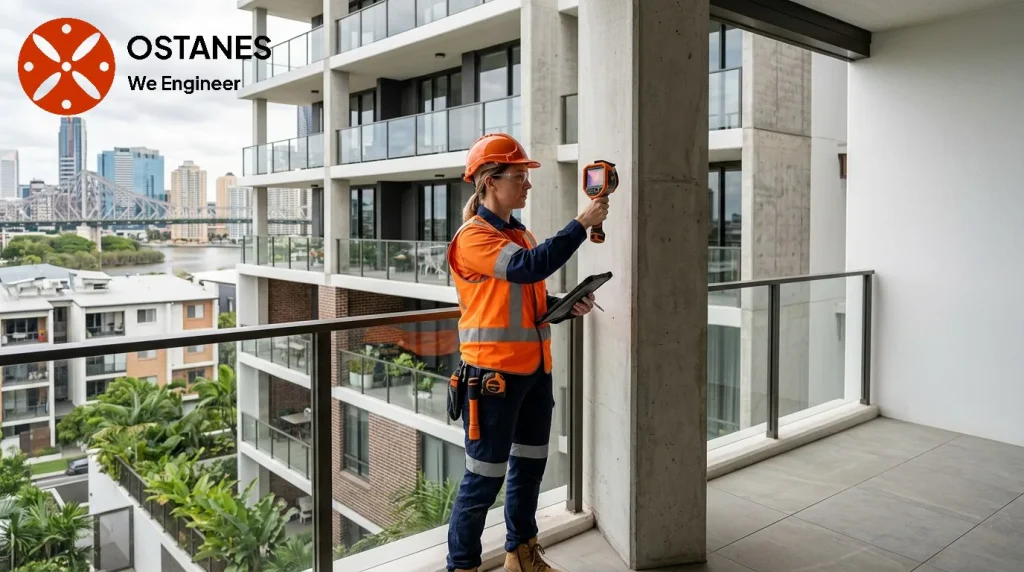
An apartment inspection should distinguish the individual lot from shared structural elements and inaccessible common property. Combine physical observations with relevant body-corporate records rather than treating either source as complete evidence.
How to use this apartment building inspection checklist
This checklist is designed as an observation and record-keeping tool. Its purpose is to document visible conditions accurately without attempting to determine the underlying cause, severity, or safety implications. When using this checklist, focus on describing what you see, where it is located, and any associated conditions. It is crucial to note that this checklist is applied to accessible areas only. Any limitations in access during the observation process must be recorded, as they can restrict the completeness of the visual record. This observational approach helps preserve useful evidence for later review.
Visible defect observation checklist
This checklist focuses on concrete observations for common apartment building defects. When using it, document specific details without attempting to diagnose the cause or severity of the issue.
- Cracking:
- Location: Precisely identify the wall, ceiling, floor, or structural element. Note its position relative to corners, windows, doors, or changes in material.
- Pattern: Describe the crack’s orientation (vertical, horizontal, diagonal, stepped) and its general shape.
- Extent: Note the length of the crack and whether it appears to extend through finishes or into the base material.
- Surrounding Conditions: Observe any associated signs such as staining, displacement of adjacent materials, or previous repair attempts.
- Photographs: Take clear, dated photographs that show both a close-up of the crack and its wider context within the building element.
- Recurrence: If previously noted, record any apparent changes in width or length since the last observation.
- Corrosion:
- Location: Specify the component affected (e.g., balcony railing, façade element, concrete slab).
- Appearance: Describe the colour and texture of the corrosion (e.g., rust stains, spalling concrete, bubbling paint).
- Extent: Note the area affected and whether it appears superficial or deeply embedded.
- Associated Conditions: Look for staining, concrete spalling, or exposed reinforcement.
- Photographs: Provide dated photographs showing the affected area and its surroundings.
- Recurrence: Record if the corrosion appears to be progressing or has spread since previous observations.
- Water Ingress:
- Location: Identify the specific area where water entry or dampness is visible (e.g., ceiling, wall, floor, window frame).
- Pattern of Dampness: Describe the shape and extent of the damp area, including any tide marks or drip trails.
- Associated Damage: Note any mould growth, blistering paint, swollen materials, or efflorescence (white, powdery deposits).
- Source (if obvious and external): Record any visible external conditions that may contribute, such as blocked downpipes or damaged flashing, without assuming direct causation.
- Photographs: Take dated photographs showing the water ingress, associated damage, and the broader context.
- Recurrence: Document if the issue is intermittent or persistent, and if it appears worse after rain events.
- Apparent Balcony Movement or Deflection:
- Location: Identify the specific balcony, its level, and the affected area.
- Observation: Describe any visible sagging, uneven surfaces, or gaps between the balcony and the main building structure.
- Cracking: Note any associated cracking in the balcony slab, edge beams, or adjacent walls.
- Handrails/Balustrades: Check for any looseness, visible distortion, or gaps in fixings.
- Photographs: Capture dated photographs of the overall balcony and any specific areas of concern.
- Recurrence: Record if any changes have been observed since prior inspections.
- Basement Car Park Issues:
- Location: Specify the level, column grid line, or specific area (e.g., ramp, wall, slab).
- Concrete Condition: Observe any visible cracking, spalling (concrete breaking away), or exposed reinforcement.
- Water Penetration: Note any active leaks, damp patches, efflorescence, or stalactite-like formations.
- Corrosion: Identify any rust stains on concrete or visible corrosion on structural steel elements or services.
- Ventilation/Drainage: Observe any signs of inadequate ventilation or blocked drains that could contribute to moisture issues.
- Photographs: Provide dated photographs of the specific issues and their surrounding context.
- Recurrence: Document if conditions appear to have worsened or if new issues have emerged.
Recording and managing inspection observations
Maintaining consistent and comprehensive records of visible observations is critical for effective building management. Each entry should include:
- Area Inspected: Clearly define the specific part of the building or apartment unit observed.
- Date of Observation: Record when the observation was made.
- Observed Condition: A concise, factual description of what was seen, without speculation on cause or severity.
- Photographs: Dated and clearly referenced images providing both context and detail of the observation.
- Access Limitations: Note any areas that could not be fully observed due to obstructions, tenant unavailability, or other factors.
- Related Reports/History: Cross-reference any previous observations, maintenance records, or related professional reports.
- Follow-Up Status: Indicate whether the observation requires further action, such as monitoring, obtaining quotes, or escalating to a professional.
Consistent records support clear communication between property managers, body corporate committees, and contractors. They provide an objective history of building conditions, which aids in prioritising maintenance and making informed decisions about when to seek professional advice.
When an observation needs specialised engineering evaluation
While routine observations are valuable, certain conditions may indicate a need for specialised engineering evaluation. These typically involve:
- Apparent Change: If a previously observed crack or deflection appears to be widening, lengthening, or worsening over time.
- Active Water Entry: Persistent or heavy water penetration that suggests a failure in the building’s envelope or drainage system.
- Exposed or Deteriorating Reinforcement: Visible rust on steel reinforcement bars or significant concrete spalling that exposes the internal structure.
- Unusual Movement: Any observed distortion, leaning, or noticeable displacement of building elements that seems out of the ordinary.
- Restricted Access: Situations where a critical area cannot be accessed for proper visual assessment, but there are concerns about its condition.
- Concerns Affecting Shared Structural Elements: Observations that may impact the overall stability or integrity of the building’s common structural components.
Queensland body corporate record context
For Queensland body corporates, diligent record-keeping of building conditions, including visible defects, contributes to transparent and effective property management. The Body Corporate and Community Management Act 1997 (Qld) outlines various requirements for body corporate records, ensuring that documentation related to the common property and its maintenance is appropriately managed. While the Act specifies what records must be kept, the detailed nature of defect observation records supports the broader governance framework by providing a clear history of property conditions. This helps in fulfilling responsibilities related to the upkeep of common property and can assist in communication with lot owners regarding maintenance issues.
Professional assessment and source checks
When visible observations require expert interpretation beyond routine documentation, referring the matter for professional engineering assessment is essential. A Registered Professional Engineer of Queensland (RPEQ) is qualified to conduct such assessments. It is always prudent to verify the credentials of any professional undertaking engineering work, which can typically be done through official regulatory bodies. This ensures that the advice and assessment received are from appropriately qualified and registered practitioners.
Can an apartment building inspection checklist replace a professional inspection?
No, an apartment building inspection checklist is an observation and documentation tool used to systematically record visible conditions. It is not a substitute for a professional engineering inspection, which involves a qualified engineer’s expert assessment, diagnosis, and recommendations.
What visible defects should a body corporate record?
A body corporate should record observations of cracking, corrosion, water ingress, any apparent balcony movement or deflection, and issues within basement car parks. The focus should be on describing what is seen, its location, and associated conditions, rather than on diagnosing the cause.
When should a property manager seek specialised engineering evaluation?
A property manager should seek specialised engineering evaluation when observations include apparent changes in existing defects, active water entry, exposed or deteriorating reinforcement, unusual building movement, significant access limitations preventing full assessment, or concerns impacting shared structural elements.
What information makes a defect record useful?
A useful defect record includes the precise location of the observation, a clear description of the visible pattern or condition, dated photographs, surrounding context, any access limitations encountered, and references to related past records. This information helps track changes and supports informed decisions.
Separate the apartment from the building’s common property
Confirm which areas you are entitled to access and whether the assessment concerns the individual lot, shared structure or both. Combine physical observations with minutes, defect reports, maintenance plans and proposed works. Record issues such as balcony cracking, water ingress, movement joints and visible deterioration without assuming responsibility from their location alone. A lot-only inspection cannot establish the condition of inaccessible common structure. Ask the body corporate for relevant engineering records and obtain legal advice on responsibilities under the scheme’s applicable arrangements.
Discuss your project with Ostanes Engineering
For help with the structural questions in this guide, discuss pre-purchase structural inspection with Ostanes Engineering. structural inspection may also be relevant where the assessment or proposal identifies that need. Agree on the scope, evidence and deliverables before commissioning additional work.
Complete the contact form with your property location, the concern or proposed work, safe photographs and any available drawings, soil report or earlier reports. Contact us through the form for a project-specific cost estimate. The team will respond as soon as possible.
Official references and further reading
For the relevant regulatory or maintenance context, consult Queensland body corporate records and Queensland maintenance responsibilities. These resources complement the project-specific advice described above.
