
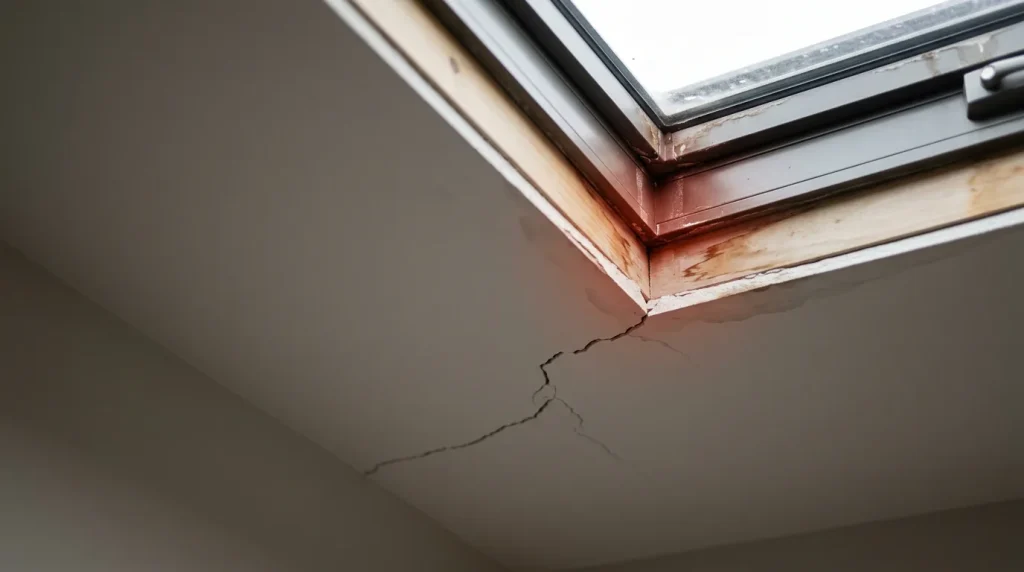
After a storm, damage you can see is often only part of the picture. In this case study, we carried out a visual structural inspection of two brick veneer units in South East Queensland before repair works began. Each unit had two storm-damaged skylights, and the units also showed internal cracking, ceiling staining and signs of moisture in the roof cavity.
The client’s concern
The client wanted a structural opinion on the accessible condition of both single-storey units before repairs commenced. Skylights had reportedly been damaged in a storm months earlier. The report was expected to help the owner and repair contractors understand what needed attention and in what order.
What Ostanes Engineering assessed
We inspected accessible internal areas, external elevations and accessible roof cavity spaces in both units, and checked crack widths with a gauge where we could. We did not access the roof exterior, for safety and access reasons, so comments on the roof and skylights are based on internal views, the roof cavity and available side views.
No intrusive investigation, material testing, moisture or mould testing, or opening-up works were carried out. One unit was vacant and the other was tenanted, which affected visibility. We were not engaged to verify the cause of the skylight damage or to determine insurance liability. The reported storm was treated as background information only.
Main findings
- External brickwork: no obvious cracking in the accessible brick veneer walls.
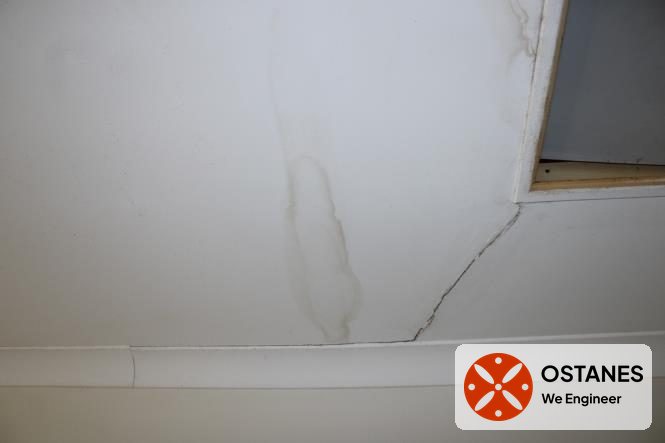
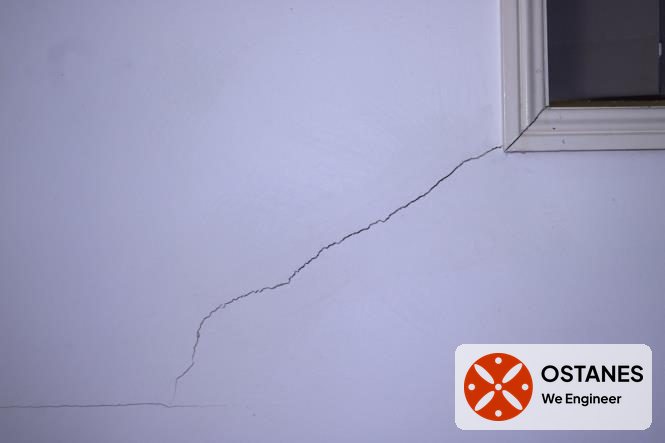
- Internal cracking: cracks in wall and ceiling linings in both units, concentrated around window sills and door openings, with some cracks over 1 mm wide and separation at lining joints and cornices.
- Unit comparison: the vacant unit showed more cracking, but limited visibility in the tenanted unit means that difference should be treated with caution.
- Water staining: staining and mould-like staining on ceilings around the skylights in both units.
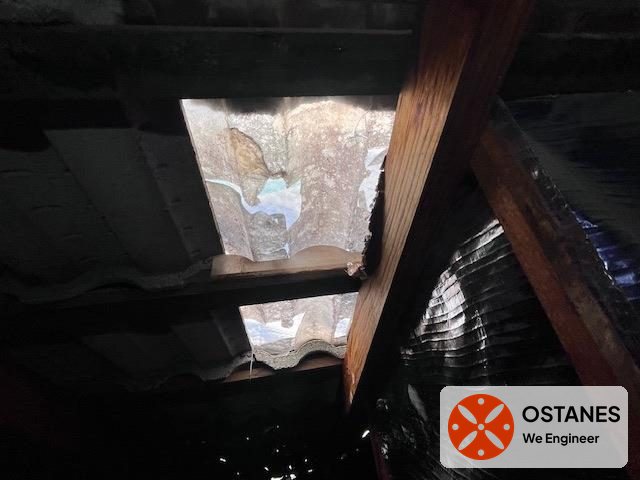
- Roof cavity: broken skylight fragments and displaced roof tile pieces, with temporary tarpaulins in place.
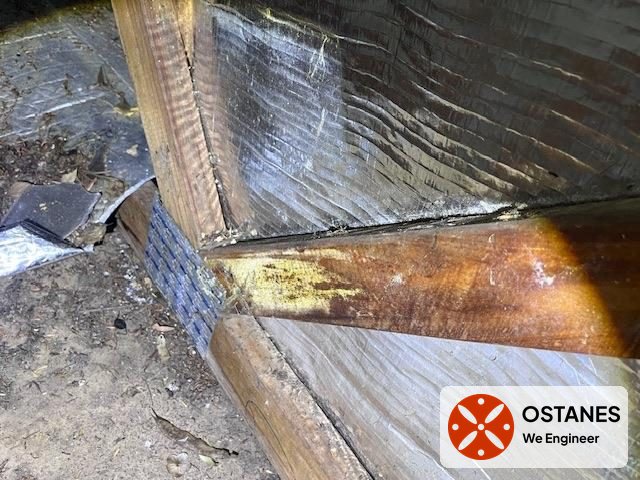
- Roof framing: water staining and brownish residue on some timber members, but no obvious structural defect in the accessible framing.
- Slab edges: exposed in places, with vegetation and bare ground beside them.
What the findings meant
The damaged skylights, fragments in the roof cavity and ceiling staining are consistent with water getting in around the affected roof areas. Temporary tarpaulins are protection, not a permanent weatherproofing measure.
The internal cracking is consistent with serviceability movement affecting the linings. It may relate to footing movement, seasonal ground movement or shrinkage, but a visual inspection alone cannot confirm the cause. Mould-like staining also cannot be diagnosed by a structural inspection, so a specialist assessment was recommended.
Where roof tiles and flashings are reinstated, installation should follow the manufacturer’s requirements and relevant standards such as AS 2050 (Installation of roof tiles). Cracking in linings can also be read against AS 2870 (Residential slabs and footings), which classifies wall damage by crack width and expects normal moisture conditions to be maintained around the slab.
Recommendations provided
- Repair the skylight and roof areas without undue delay, using a qualified roofing contractor experienced in tiled roofs and skylights, whether the skylights are replaced or permanently closed off.
- Have a hygienist or mould specialist assess ceilings, wall linings and roof cavities before or during repairs.
- Replace water-damaged or mould-affected plasterboard where it is unsuitable for patch repair.
- Have contractors review stained roof framing and nearby connectors during repairs, and do not cut or alter trusses without review by a suitably qualified person.
- Seek further engineering advice if softening, decay, corrosion or other concealed damage is found.
- Monitor internal cracks for around 6 to 12 months before final cosmetic repairs.
- Direct surface water away from slab edges, and keep vegetation and soil from trapping moisture against walls and weep holes.
Key takeaways for property owners
A structural inspection before repairs helps separate what is cosmetic, what is moisture-related and what needs a specialist, so the right trades are involved in the right order. For more background, read what a structural engineer checks after severe storm damage, how water damage can affect a building, and when a structural engineer’s report is needed for an insurance claim.
Frequently asked questions
Does a structural inspection determine why a skylight failed?
Not unless the engagement says so. In this case, we were not engaged to investigate the cause of the skylight damage or any insurance liability. The inspection focused on the accessible structural condition before repairs.
Is a tarpaulin a safe long-term fix?
No. Temporary protection should not be relied on as permanent weatherproofing. Permanent roof and skylight repairs by a qualified roofing contractor were recommended.
Who should assess mould?
A suitably qualified hygienist or mould specialist. The presence, extent and type of mould cannot be confirmed by a structural visual inspection.
Talk to Ostanes Engineering about storm or water damage
If your home or investment property has storm, roof or water damage, our team can provide a roof structural assessment or an insurance damage structural report, depending on what you need. See all our structural inspection services, or send details through the contact form.
Ostanes Engineering provides these services across South East Queensland, including Brisbane, Ipswich, Logan, Gold Coast and Sunshine Coast.
This case study summarises a structural inspection and the recommendations we provided. It does not describe the outcome of any repairs or any insurance process.
