
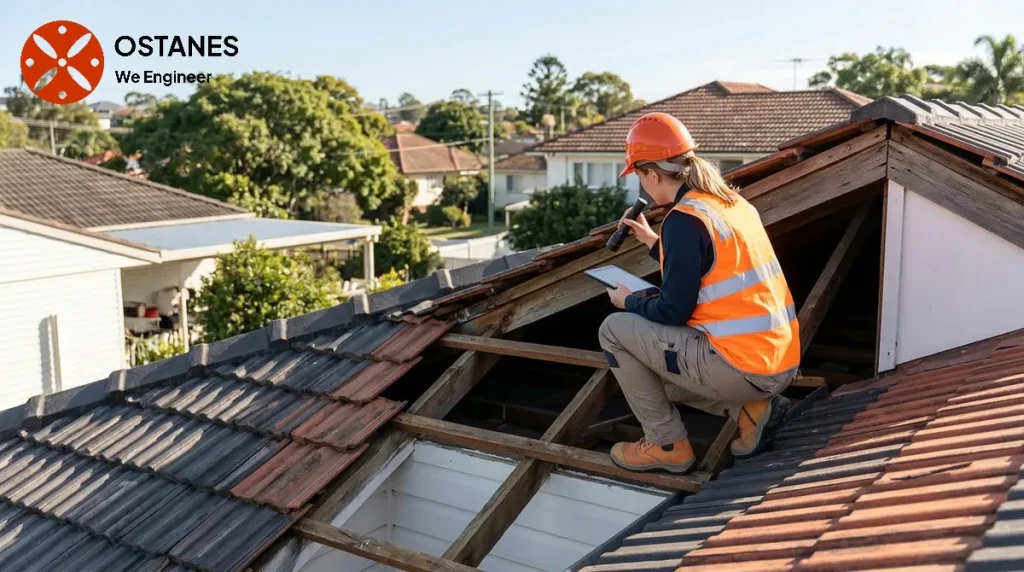
A solar-panel roof check considers the proposed mounting system, added actions and relevant roof members and supports. The actual installation and existing condition determine the assessment needed, rather than a generic assurance.
Why a structural check can matter before solar panels
While your roof may appear sound, the addition of solar panels can alter its loading conditions significantly. Existing roof structures are designed to support specific loads, and adding solar panels increases both the permanent (dead) load and the forces from wind. An engineering assessment examines how these new loads interact with your roof’s existing trusses, rafters, and connections. It considers factors like the roof’s original design capacity, its current condition, and any past alterations, which are not always evident from a visual inspection alone.
How solar loads interact with an existing roof
The assessment considers the proposed mounting system and how gravity and wind actions are transferred through connections to the relevant roof members and supports. The applicable load path depends on the actual installation; roof sheeting alone should not be assumed to establish structural capacity.
Roof age and framing condition
The age of your roof can be a factor in its current structural capacity. Older roofs may have experienced cumulative wear, material degradation, or have been constructed to earlier building standards. Visible signs such as sagging roof lines, cracked or split timber members, corroded connections, or evidence of long-term water damage can indicate reduced structural integrity. Previous uncertified alterations to the roof framing can also compromise its load-bearing capacity. These indicators suggest that the roof structure may not be able to accommodate additional loads without further assessment.
Queensland context for structural decisions
For any significant modification to a structure, including the addition of solar panels, it is prudent to consider current building standards. In Queensland, structural alterations or additions must meet the requirements of the National Construction Code (NCC). An engineering assessment ensures that the existing roof structure, with the proposed solar panel system, can comply with these standards. Such an assessment focuses on the structural integrity and safety of the roof for its intended lifespan.
What this structural check does not cover
A roof structural assessment specifically evaluates the ability of your roof framing to support the additional weight and wind loads of solar panels. It does not cover the selection or purchase of solar equipment, the installation process of the panels, or the electrical wiring and certification required for a solar power system. This assessment also does not prescribe specific repair methods, recommend products, or guarantee any approval outcome from regulatory bodies or local councils.
Do all roofs need a structural check before solar panels?
Not every roof automatically requires a structural check. The need depends on factors such as the roof’s age, visible condition, past alterations, and the specific design of the proposed solar panel system. If any doubts exist about the roof’s capacity, an assessment is prudent.
What roof problems may justify an engineer assessment before solar panels?
Signs such as sagging roof members, cracked or split timbers, widespread corrosion at connections, significant water damage, or evidence of previous uncertified structural modifications can all indicate a need for professional engineering review before adding solar panels.
Does a solar installer provide structural engineering advice?
Solar installers are experts in solar system design and installation. While they can assess the practicalities of panel placement, they typically do not provide structural engineering advice regarding the load-bearing capacity of your roof. This falls under the domain of a qualified structural engineer.
Does the structural check provide electrical certification?
No, a structural assessment focuses solely on the physical integrity and load-bearing capacity of the roof structure. Electrical certification for solar panel installations is a separate process performed by a licensed electrician, ensuring the electrical components comply with relevant standards.
Who should Queensland homeowners contact when roof capacity is uncertain?
When there is uncertainty about your roof’s capacity to support solar panels, Queensland homeowners should contact a Registered Professional Engineer of Queensland (RPEQ) specialising in structural engineering. An RPEQ engineer can provide an impartial assessment of your roof’s suitability.
Review the mounting system and load path for the proposed panels
Supply the panel and mounting layout, equipment information and any available roof drawings. Added gravity and wind actions must be considered through the mounting connections and relevant roof members and supports. Loads are not necessarily transferred through roof sheeting alone. Existing deterioration or alterations may change the assessment. Ask the installer and engineer what project-specific evidence is needed before installation; a generic statement about solar panels does not establish that every roof is adequate or that every project needs the same investigation.
Discuss your project with Ostanes Engineering
For help with the structural questions in this guide, discuss roof structural assessment with Ostanes Engineering. structural engineering design may also be relevant where the assessment or proposal identifies that need. Agree on the scope, evidence and deliverables before commissioning additional work.
Complete the contact form with your property location, the concern or proposed work, safe photographs and any available drawings, soil report or earlier reports. Contact us through the form for a project-specific cost estimate. The team will respond as soon as possible.
Official references and further reading
For the relevant regulatory or maintenance context, consult Queensland approvals and inspections and QBCC home maintenance. These resources complement the project-specific advice described above.
