
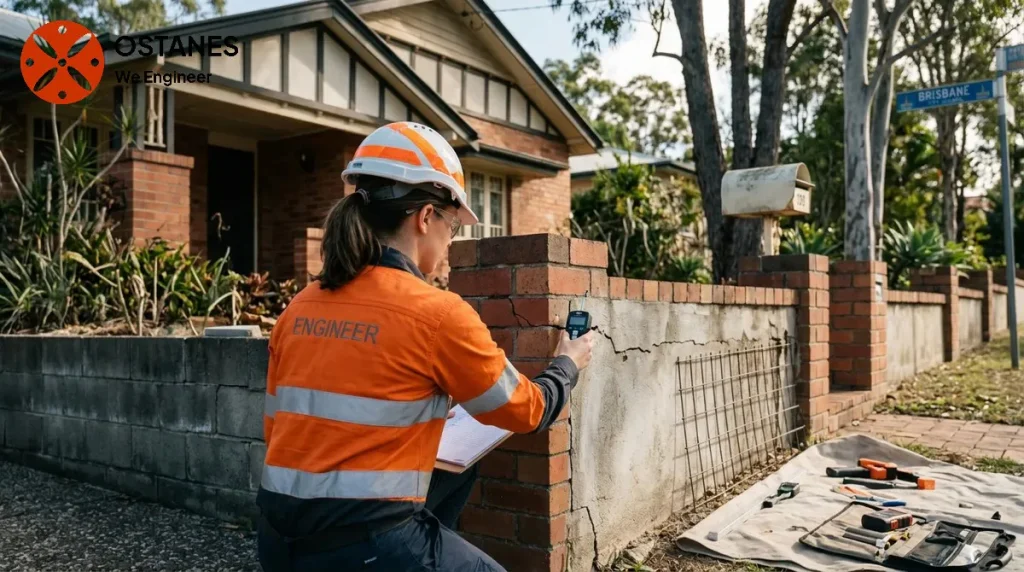
A forensic structural investigation addresses defined questions about damage, mechanism or chronology. Clear evidence, limitations and reasoning matter more than a predetermined conclusion.
Forensic investigation versus routine structural inspection
A routine structural inspection typically provides a visual assessment of a property’s condition at a specific point in time. It identifies visible defects and general concerns. In contrast, a forensic structural investigation involves a more detailed inquiry, often triggered by unexpected damage, ongoing structural movement, or a dispute where understanding the origin of a problem is critical.
The core difference lies in the investigative depth and the focus on evidence. A forensic investigation seeks to establish a sequence of events, collect relevant historical data, and interpret how various factors might have contributed to observed structural conditions. This can involve reviewing property plans, maintenance records, and site history to build a comprehensive picture. For instance, a routine inspection might note a crack, while a forensic investigation would seek to understand when it appeared, its progression, and what site or environmental factors could be involved. We gather and analyse the available structural evidence to form a reasoned engineering opinion. Property owners seeking this deeper level of analysis can consider a Forensic Structural Investigation.
This approach allows for a structured evaluation of possible contributing factors, which may include ground movement, material deterioration, design considerations, or construction practices. It provides a framework for separating observations, evidence, possible contributing factors, and engineering conclusions, offering a more thorough basis for understanding structural issues than a standard visual check.
Evidence, chronology and structural failure analysis
In a forensic structural investigation, evidence gathering is crucial for establishing the context of observed conditions. This can include dated photographs showing the progression of damage, building plans, soil reports, maintenance logs, and historical weather data. Site observations are integrated with this documented history to form a comprehensive chronology of events.
Structural failure analysis evaluates possible contributing factors using the gathered evidence. It cannot diagnose a property remotely. For example, a particular crack pattern may indicate different types of movement, each potentially linked to various underlying causes. The engineer interprets the available data, considering how elements like soil conditions, drainage, tree roots, or building alterations might relate to the observed structural behaviour. This process distinguishes between factual records and engineering interpretation, acknowledging that multiple factors can interact to create complex structural issues. It provides an informed perspective without prescribing specific repair methods or testing protocols.
Potential dispute support and its limits
When structural issues become part of a dispute, clear technical records and reasoned engineering analysis can be valuable. A forensic structural investigation aims to present observations and interpretations in an objective, well-documented manner. This comprehensive record can assist communication between parties, clarify technical aspects of a problem, and support the review process in discussions or formal proceedings.
A forensic report provides expert technical insight, but cannot guarantee specific legal dispute outcomes, determine liability, ensure evidentiary acceptance in court, or predict the success of a case. Its purpose is to provide a sound engineering opinion based on available evidence, helping stakeholders understand the technical aspects of structural issues within a dispute context.
Queensland context and source boundaries
The report should identify the technical basis actually used and explain how it applies to the structure and evidence. Further investigation may be needed where the available information cannot establish the relevant site conditions.
How does forensic structural investigation work?
A forensic structural investigation involves a detailed process of gathering evidence, including historical records and site observations, to establish a chronology of events. An engineer then interprets this information to analyse possible contributing factors to observed structural conditions, providing an informed technical understanding of the issue.
How is a forensic investigation different from a routine structural inspection?
A routine inspection offers a visual overview of a property’s condition at a point in time, while a forensic investigation examines the history and possible causes of a problem. It focuses on collecting evidence, understanding the history of a problem, and conducting a detailed engineering analysis of potential causes, rather than just noting visible defects.
Can photographs establish the cause of structural damage?
Photographs are valuable evidence as they can document the condition of a structure over time and provide context. However, photographs alone cannot definitively establish the cause of structural damage. An engineer assesses photographic evidence alongside other data, such as site observations and historical records, to form a professional opinion. If there is uncertainty about the cause of damage, an engineering assessment is recommended.
Can a forensic investigation guarantee a legal dispute outcome?
No, a forensic structural investigation cannot guarantee any specific legal dispute outcome. While a thorough technical report can provide clear evidence and reasoned analysis that may assist in dispute resolution or legal proceedings, it does not guarantee liability, court admissibility, or a successful case result.
What should a Queensland property owner do when structural risk appears acute?
If a Queensland property owner observes signs of acute structural risk, such as sudden, significant cracking, rapid movement, or visible distortion, it is important to seek immediate professional inspection. Do not attempt self-assessment or repairs in such situations; contact a qualified structural engineer for an urgent assessment.
Start with questions and a defensible evidence record
A forensic investigation should identify what needs to be explained, such as the damage mechanism, chronology or relationship to an event. Provide the available reports, photographs, drawings and relevant correspondence. The engineer may need targeted testing or other specialist evidence where observations are insufficient. Conclusions should distinguish established facts from assumptions and competing explanations. A report prepared for a dispute must match the agreed technical scope; engineering analysis does not by itself determine legal liability or the outcome of proceedings.
Discuss your project with Ostanes Engineering
For help with the structural questions in this guide, discuss forensic structural investigation with Ostanes Engineering. insurance damage structural report may also be relevant where the assessment or proposal identifies that need. Agree on the scope, evidence and deliverables before commissioning additional work.
For a project-specific cost estimate, complete the contact form with your property location, the concern or proposed work, safe photographs and any available drawings, soil report or earlier reports. The team will respond as soon as possible.
Official references and further reading
For the relevant regulatory or maintenance context, consult Insurance Council expert-report guidance and BPEQ registration.
