
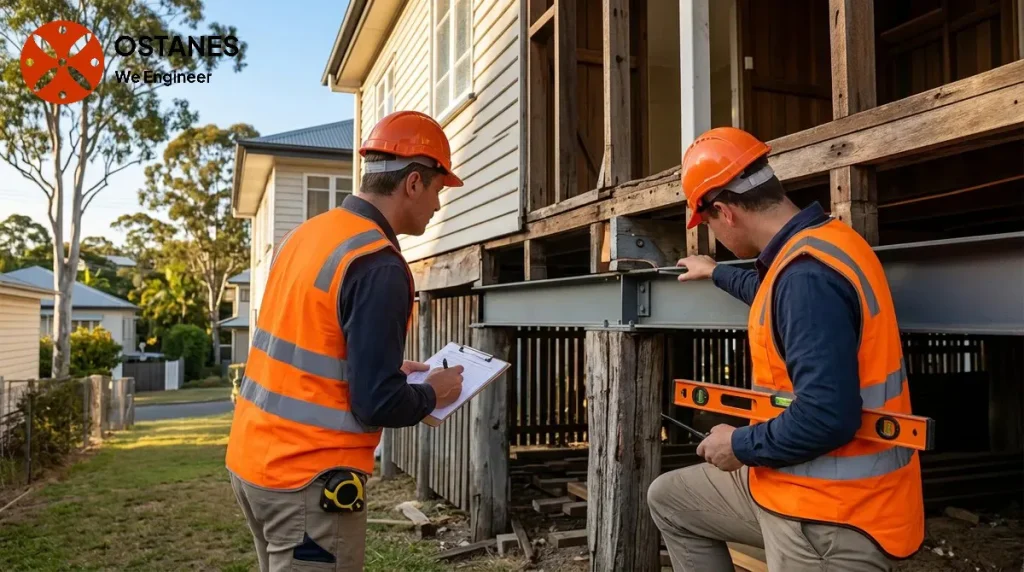
A building inspection and a structural assessment have different scopes. Use the general report to identify concerns, then agree on specialist follow-up where structural questions remain unresolved.
What Each Inspection Is Designed to Answer
A general building inspection typically provides an overview of a property’s overall condition. Its primary aim is to identify visible defects or conditions that may affect the property’s value or safety. This can include issues with roofing, interior and exterior elements, services, and general workmanship. Such reports are often sought during pre-purchase stages to inform a buyer about potential issues that might not be immediately obvious.
In contrast, a structural inspection addresses concerns related to the fundamental load-bearing components of a building, such as foundations, footings, floor systems, walls, and roof framing. This type of inspection is usually commissioned when there are specific indicators of potential structural distress, like significant cracking, uneven floors, or signs of subsidence. The focus is on assessing the structural integrity and stability, rather than cosmetic or general maintenance issues. The findings from a general building inspection, for example, may suggest the need for a more specialised structural assessment if concerning signs are observed.
Comparison at a Glance
| Feature | General Building Inspection | Structural Inspection |
|---|---|---|
| Purpose | Identifies visible defects and conditions across the property. | Assesses integrity and stability of primary load-bearing elements. |
| Practitioner Role | Building inspector or licensed builder. | Registered Professional Engineer of Queensland (RPEQ). |
| Inspection Depth | Visual assessment of accessible areas, covering a broad range of building components. Refers to guidelines such as AS 4349. | Focused assessment of specific areas of concern and load-bearing structures. May involve more detailed analysis. |
| Reporting Purpose | Comprehensive report on observed defects, general condition, and maintenance items. | Technical report detailing structural integrity, cause of observed distress, and engineering recommendations. |
| Appropriate Use Cases | Pre-purchase due diligence for general condition, identification of non-structural defects, maintenance planning. | Investigation of significant cracking, subsidence, uneven floors, or other signs of structural distress; assessment of modifications. |
| Cost Drivers | Property size, age, accessibility, comprehensiveness of report. | Complexity of structural issues, property size, required analysis, level of detail in reporting. |
Building Inspector and Structural Engineer: Different Questions
The roles of a building inspector and a structural engineer, and therefore who does structural inspections, are distinct. A building inspector, often a licensed builder, is trained to identify a wide range of building defects and compliance issues. Their reports typically cover a broad spectrum of a property’s condition, from minor issues to significant defects, but generally do not provide an in-depth engineering analysis of structural elements.
Conversely, a structural engineer is a qualified professional with expertise in the analysis and design of structures. In Queensland, this typically means a Registered Professional Engineer of Queensland (RPEQ) who holds specific qualifications and experience in structural engineering. An RPEQ engineer provides an assessment of the structural integrity of a building, evaluating its foundations, framework, and other load-bearing components. When considering a structural engineer vs building inspector, it’s important to recognise that an RPEQ engineer is specifically qualified to assess structural performance and provide engineering solutions. Claims regarding RPEQ registration and regulation can be verified through the BPEQ (Board of Professional Engineers of Queensland). While a building inspector can identify visible signs of potential structural issues, an RPEQ structural engineer is required to determine their significance and provide professional engineering advice.
Which Property Inspection Do You Need?
Deciding which property inspection you need depends on your specific concerns. If you are a potential buyer seeking a general overview of a property’s condition, a pre-purchase building inspection is typically the first step. This inspection can highlight maintenance issues, general defects, and visible signs that may prompt further investigation. Information and guidance on building inspections in Queensland can be found via the QBCC (Queensland Building and Construction Commission).
However, if you observe specific indicators of potential structural problems—such as large, visible cracks in walls or foundations, uneven or sagging floors, or signs of subsidence—then a structural inspection by an RPEQ structural engineer is generally more appropriate. This specialised assessment focuses on the building’s core stability and can provide clarity on the cause and extent of any structural distress. It is also advisable if you are planning renovations that may impact load-bearing walls or if you are concerned about past structural repairs. Always choose the inspection that directly addresses your primary concern, whether it’s a broad understanding of the property’s condition or a focused assessment of its structural integrity.
Is a building inspection the same as a structural inspection?
No, they are distinct. A general building inspection identifies visible defects across a property, including non-structural issues. A structural inspection, performed by a qualified structural engineer, specifically assesses the integrity and stability of the building’s load-bearing components.
Who does structural inspections?
Structural inspections are conducted by qualified structural engineers. In Queensland, this means a Registered Professional Engineer of Queensland (RPEQ), whose registration and regulation are overseen by the BPEQ.
Can a building-defect report identify a structural problem?
A building-defect report can identify visible signs or observations that may indicate a potential structural problem. However, it typically does not provide a definitive structural diagnosis or detailed engineering analysis. Such findings often prompt the recommendation for a separate, specialised structural inspection by an RPEQ engineer.
Which property inspection do I need before buying?
For most property buyers, a general pre-purchase building inspection is recommended to identify overall defects and maintenance concerns. If that report, or your own observations, reveal specific issues that suggest potential structural distress (e.g., significant cracking or uneven floors), then a structural inspection by an RPEQ engineer would be the next appropriate step to assess those specific concerns.
Use the general inspection to scope specialist follow-up
A general building inspection may identify observable defects across multiple building elements, while a structural assessment focuses on specified structural questions. Building and pest inspection providers have their own qualifications and scope; do not infer that every general inspector lacks engineering expertise. If structural concerns are raised, share the report and ask what specialist investigation is warranted. The two reports should be read together, with their exclusions and access limitations, rather than expecting either one to answer every purchasing or approval question.
Discuss your project with Ostanes Engineering
For help with the structural questions in this guide, discuss structural inspection with Ostanes Engineering. pre-purchase structural inspection may also be relevant where the assessment or proposal identifies that need. Agree on the scope, evidence and deliverables before commissioning additional work.
Complete the contact form with your property location, the concern or proposed work, safe photographs and any available drawings, soil report or earlier reports. Contact us through the form for a project-specific cost estimate. The team will respond as soon as possible.
Official references and further reading
For the relevant regulatory or maintenance context, consult BPEQ registration and Queensland buying into a body corporate. These resources complement the project-specific advice described above.
