
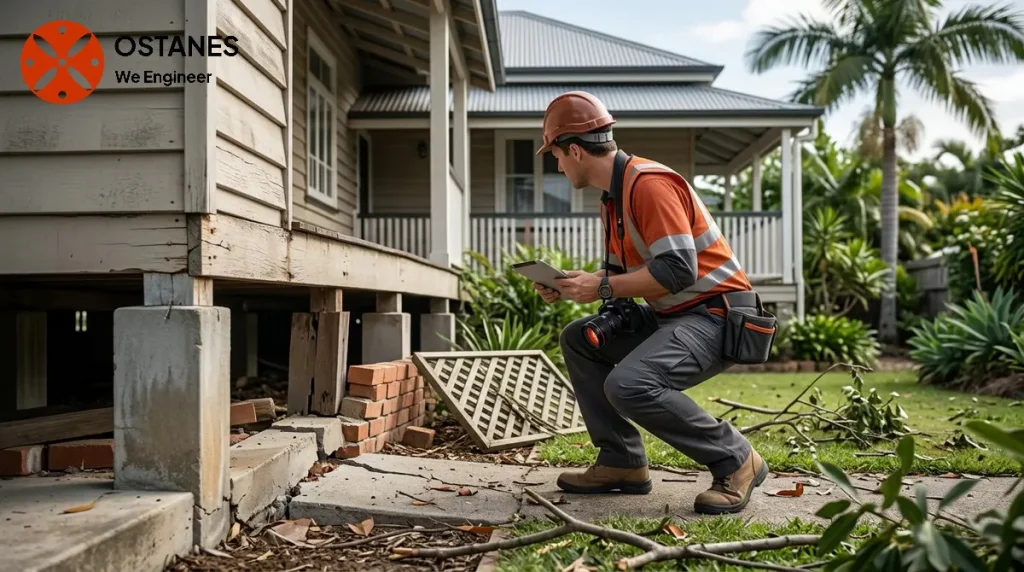
A post-storm structural inspection can assess reported damage and identify further investigation or repair-design needs. Preserve the event chronology and earlier condition evidence, and avoid entering or climbing onto unsafe areas.
What to do before anyone enters the affected area
Prioritising safety is essential when a building has experienced severe storm or cyclone building damage. Before anyone considers entering an affected area, it is critical to observe the property from a safe distance. Look for any visible signs of instability, such as a roof that appears unstable, displaced building elements like walls or balconies, or any fallen or damaged utility services. Water-affected areas may also pose hazards, and disturbing compromised conditions could worsen the damage or create new risks. Documenting visible conditions from a safe vantage point with photographs or notes can be helpful, but avoid any actions that require entering an area that appears compromised or unstable. If there are signs of acute risk, such as imminent collapse, significant displacement, or damaged electrical lines, immediate professional inspection is necessary.
How the inspection moves from safe observation to structural assessment
An engineering assessment bridges the gap between initial visual observations and a professional determination of a structure’s condition after storm damage. While photographs and descriptions can document visible conditions, they cannot replace an on-site structural engineering assessment for a property-specific diagnosis. The engineer considers the location and pattern of observed damage, the extent of any displacement, the condition of connections between building elements, and how conditions may have changed from the pre-storm state. These observations may indicate underlying issues, but a definitive structural conclusion requires a direct examination of the affected property.
Roof connections and framing
During a storm damage structural inspection, a structural engineer typically examines the roof structure for signs of impact. This includes assessing the integrity of roof-to-wall connections, which are critical for resisting uplift forces. The condition of framing members, bracing, and any visible displacement of roof components are also observed. Broken or separated elements and indications that wind or impact forces have affected the roof structure are key areas of focus. A comprehensive storm damaged roof assessment looks for direct damage and indirect signs that structural integrity may have been compromised.
Walls, ceilings and support elements
Severe storm conditions can cause visible changes in a building’s walls, ceilings, posts, beams, and openings, all of which may suggest structural movement. An engineer will observe cracks, bulges, sagging, or any other distortions in these elements. While isolated signs can occur, they are typically assessed in context with the broader building structure to understand their significance. An inspection identifies these indicators without diagnosing a specific property or prescribing remedial work.
Moisture ingress and related damage
Storm-driven water entry can significantly affect a building’s structural elements and interior finishes. During an assessment, signs of moisture ingress are considered in conjunction with observations of the roof and walls. This includes looking for staining, persistent dampness, swelling of materials, deterioration of timber or plasterboard, and changes around penetrations or openings. These indicators can suggest areas where the building envelope may have been compromised, potentially leading to further damage.
What an engineering assessment can and cannot establish
An engineering assessment provides professional insight into the structural condition and safety of a building after storm damage. It establishes observations about the apparent condition of structural elements and draws conclusions based on an inspection of the affected structure. However, it does not guarantee a safety result, an approval, a certification outcome, an insurance outcome, or a claim outcome. The assessment focuses on the structural integrity, not on insurance coverage decisions, repair specifications, or guaranteed results.
When to seek an engineering assessment
If you observe significant visible movement, major roof damage, or water entry combined with changes to structural elements after a storm, or if there is uncertainty about the safety of your property, a professional assessment is warranted. Even if access is restricted due to unsafe conditions, an engineering opinion can still provide valuable guidance on the next steps. As registered professional engineers, we can assess structural damage caused by severe weather events. For specific guidance on assessing storm-affected structures, consider an Insurance Damage Structural Report.
What does a structural engineer check after a severe storm?
A structural engineer examines various elements, including roof connections, framing, support elements, signs of structural movement, and indications of moisture ingress, to assess storm damage.
Can photographs show whether storm damage is structural?
Photographs can be valuable for documenting visible conditions of storm damage but cannot replace an on-site assessment by a qualified engineer for a property-specific diagnosis.
Is it safe to enter a storm-damaged building?
It is generally not safe to enter areas of a storm-damaged building that appear compromised or unstable. Always prioritise safety and seek professional guidance rather than attempting to self-assess inside potentially hazardous areas.
What should I do if I see roof movement or water entering after a storm?
If you observe roof movement or water entering your property after a storm, it is important to stay clear of the affected area, document your observations from a safe location, and seek professional assessment to evaluate the extent and nature of the damage.
Record the storm sequence and pre-existing condition
Photograph damage from safe positions, note when it appeared and keep earlier photographs or maintenance records where available. Distinguish roof-covering damage, water ingress and damage to structural members in the information supplied. Do not climb onto a damaged roof. The assessment should identify access limitations and whether temporary protection, further investigation or repair design is needed. Where an insurance claim is involved, clarify the technical questions and preserve the evidence used to distinguish storm effects from older deterioration.
Discuss your project with Ostanes Engineering
Ostanes Engineering’s insurance damage structural report addresses the agreed structural damage questions. A forensic structural investigation may be appropriate where the mechanism or competing explanations require deeper investigation. These services provide technical evidence and do not guarantee claim acceptance.
Complete the contact form with your property location, the concern or proposed work, safe photographs and any available drawings, soil report or earlier reports. Contact us through the form for a project-specific cost estimate. The team will respond as soon as possible.
Official references and further reading
For the relevant regulatory or maintenance context, consult Insurance Council expert-report guidance and Queensland approvals and inspections. These resources complement the project-specific advice described above.
