
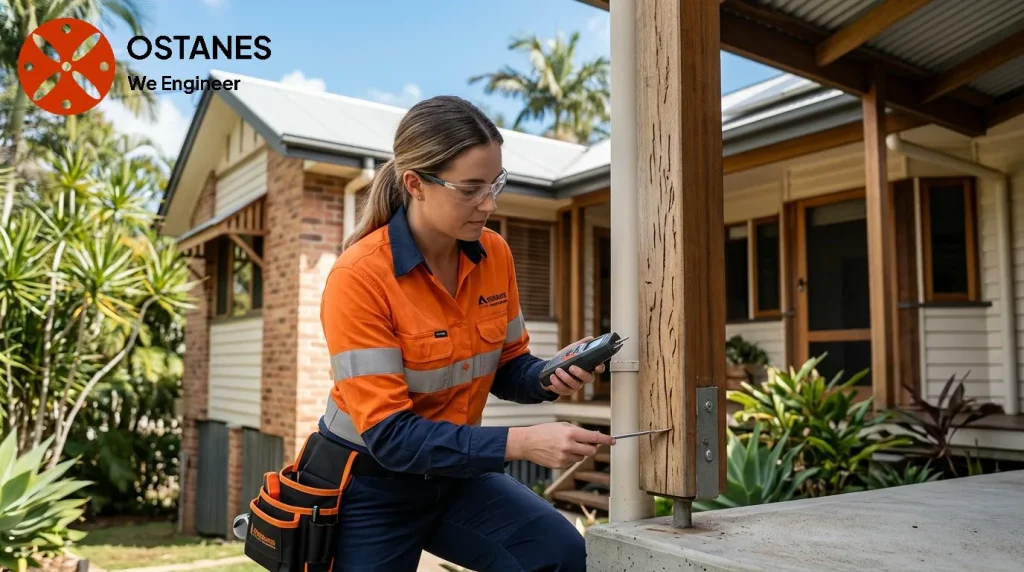
Termite treatment and structural repair answer different questions. Where load-bearing timber may be affected, pest information should be coordinated with an assessment of the remaining members, connections and supports.
Pest findings and structural engineering assessment
Understanding the difference between a timber pest report and a structural engineering assessment is crucial for property owners. A timber pest report, often prepared by a licensed pest professional, focuses on identifying and reporting evidence of active termites or past termite activity, along with conditions conducive to their presence. This report helps inform about the presence of pests and the visible extent of their impact on timber elements.
A structural engineering assessment, conversely, focuses on evaluating the integrity and load-carrying capacity of the building’s structural components. If a pest report indicates the presence of termite damage to timber, a structural engineer will assess how this damage affects the structural stability and safety of the building. This assessment considers factors such as the type of timber, its position in the structure, and the degree of timber degradation. The expertise of an RPEQ-registered engineer is to determine if damaged timber still meets the required structural performance.
What termite damage may mean for structural timber
Damage to timber caused by termites can manifest in several ways that may affect a building’s structural integrity. When assessing the impact, engineers consider elements such as the extent of timber loss within a structural member, the continuity of load paths, and the condition of connections between timber elements. For instance, hollowed-out timber beams or posts, or damage at joints and connections, can compromise the ability of the structure to transfer loads effectively.
Signs of structural timber damage that may warrant further assessment include visible sagging or distortion of timber members, unexpected deflection in floors or roofs, and difficulties with doors or windows binding, which could suggest movement in the building frame. The location of damage is also important; damage to critical load-bearing elements such as stumps, bearers, joists, or wall framing may have a greater structural impact than damage to non-load-bearing components. However, these are observations only; the actual structural implications always require a qualified assessment.
How damage can affect structural capacity and integrity
The location and extent of observed timber deterioration are key factors in understanding its impact on a building’s structural capacity and integrity. Termite damage to framing members, such as wall studs, floor joists, or roof trusses, can compromise their ability to support loads. This can lead to a reduction in the overall strength and stability of the affected section of the building.
When significant sections of structural timber are weakened, it can disrupt the intended load path, forcing stresses onto other, potentially unprepared, parts of the structure. Damage to connections between timber elements, such as where a floor bearer meets a stump, can also reduce the overall integrity. Apparent deformation, such as bowing walls, uneven floors, or sagging rooflines, may indicate that timber elements are no longer performing their intended structural role. While Queensland’s climate and soil conditions can contribute to building movement, observable structural changes require a specific engineering assessment to determine if these are related to termite activity or other factors.
When to seek an engineering assessment after a pest report
When engaging an engineer, provide them with a copy of the pest report, any photographs you have taken, and details of any associated observations like sagging floors or jammed windows. This information helps the engineer focus their on-site inspection. If the pest report indicates significant damage to primary structural elements, or if there is visible evidence of sudden or ongoing structural movement, an immediate professional inspection is advisable. An engineering assessment can help clarify the extent of any structural compromise and the necessary next steps. We can provide a structural movement report to evaluate the implications of any observed damage.
Does a pest report confirm structural damage?
No. A pest report primarily identifies the presence of pests and any visible damage they have caused to timber. It describes the condition but does not typically include a structural engineering assessment of load capacity or integrity. That assessment requires specific engineering expertise.
What are signs of structural timber damage?
Signs that may indicate structural timber damage include noticeable sagging in floors, ceilings, or rooflines, walls that appear to be bowing or leaning, or doors and windows that stick or do not close properly. These observations suggest that a structural element may be compromised and warrant further investigation.
When should I contact an engineer after a pest report?
You should contact an engineer after a pest report if the report identifies possible termite damage to structural timber, if the structural significance of the damage is unclear, or if you notice any associated visible changes to the building such as sagging or movement. An on-site engineering assessment can then clarify the situation.
Can photographs confirm termite structural damage?
Photographs and written descriptions can provide valuable context for an engineer before an inspection. However, they cannot, on their own, confirm the exact extent of termite structural damage or its precise implications for a specific property’s structural integrity. An on-site assessment by a qualified engineer is necessary for an accurate determination.
Can an engineer recommend a termite treatment?
No. A structural engineer’s role is to assess the structural integrity of a building. Recommendations for termite treatment, pest management, or preventative measures fall under the expertise of a licensed pest professional.
Coordinate pest treatment with structural assessment
A pest inspection identifies termite activity and treatment needs; a structural assessment considers the remaining capacity and repair of affected load-bearing members. Share the pest report, treatment history and accessible photographs with the engineer. Surface appearance may not reveal the extent of internal timber loss. Do not remove damaged posts, joists or bracing before support and repair requirements are considered. The repair scope should identify affected members, access constraints and any further opening-up required, with pest management coordinated separately.
Discuss your project with Ostanes Engineering
For help with the structural questions in this guide, discuss structural crack and movement report with Ostanes Engineering. structural inspection may also be relevant where the assessment or proposal identifies that need. Agree on the scope, evidence and deliverables before commissioning additional work.
Complete the contact form with your property location, the concern or proposed work, safe photographs and any available drawings, soil report or earlier reports. Contact us through the form for a project-specific cost estimate. The team will respond as soon as possible.
Official references and further reading
For the relevant regulatory or maintenance context, consult QBCC termite protection and QBCC home maintenance. These resources complement the project-specific advice described above.
