
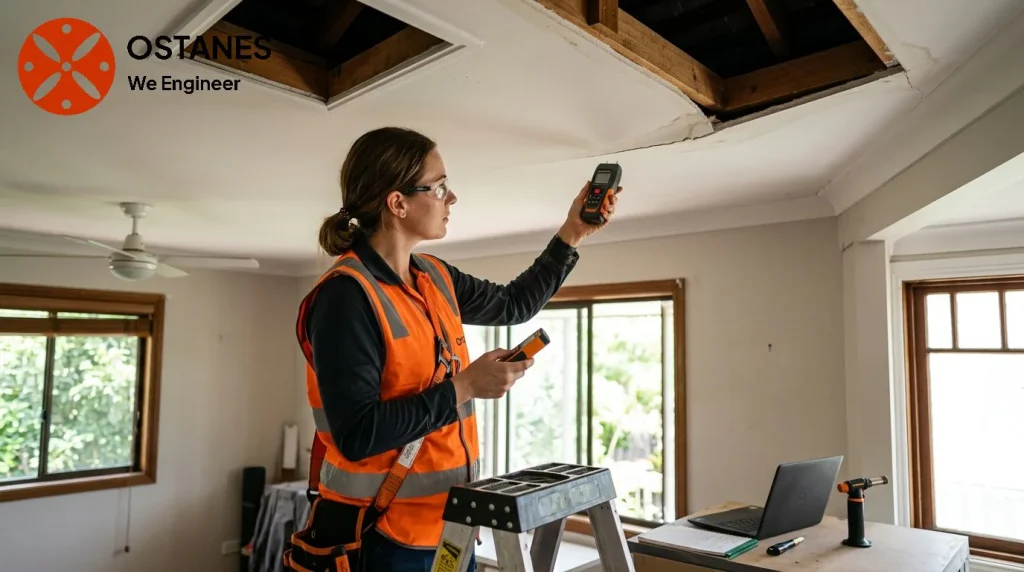
A sagging ceiling may involve lining failure, water damage or movement of roof members and supports. Keep clear of loose or visibly failing material and arrange appropriate professional attention.
Plasterboard sagging versus roof-member deflection
When you observe a sagging ceiling, it is crucial to distinguish between movement in the ceiling’s plasterboard or other lining material and possible deflection in the structural roof members above. Ceiling deflection is a descriptive term for the visible downward curve or dip, but it doesn’t automatically mean the main roof structure is compromised.
Plasterboard sagging often appears as a localised dip or undulation in the ceiling surface. This can result from issues with the plasterboard itself, its fixings, or the battens that support it. In contrast, deflection of structural roof members—such as rafters or trusses—can manifest as a broader, more widespread sag across a larger ceiling area, potentially affecting the roofline visible from outside. Both can present similar visual symptoms, making it difficult to determine the affected building element without a professional assessment. Relying solely on photographs or written descriptions is insufficient to establish whether the problem lies with the ceiling finish or the underlying roof structure.
Possible causes of a sagging ceiling
A variety of factors can contribute to a sagging ceiling. One common category involves moisture exposure, which can weaken ceiling materials or their support. Changes around fixings or supports, such as screws coming loose or timber battens warping, can also lead to localised sagging. Movement at junctions where ceiling sheets meet or where the ceiling joins walls may also become apparent. In some cases, the issue may relate to the roof structure itself, indicating possible deflection or movement of primary roof members like rafters, trusses, or beams. These are potential categories of cause, and identifying the specific reason requires an on-site evaluation.
Warning signs that need urgent attention
While any visible ceiling sag warrants investigation, certain roof sagging signs may indicate a more serious underlying issue and require urgent attention. If you notice sudden or rapidly worsening movement in the ceiling, or if the sagging is broad and uneven across a significant area, these could be indicators of a developing problem. Separation or cracking around cornices, ceiling roses, or where the ceiling meets walls can also be concerning. Any evidence of water entry, such as stains, drips, or dampness on the ceiling, suggests a potential roof leak or plumbing issue that needs prompt investigation. Unusual noises like creaking, groaning, or cracking sounds emanating from the roof or ceiling, especially when accompanied by visible movement, should not be ignored. Above all, if there is any immediate concern about the safety of the ceiling, such as a feeling that it might collapse, professional inspection is critical.
Is a sagging ceiling always a structural problem?
No, a sagging ceiling is not always a structural problem. Visible sagging can involve non-structural elements like the plasterboard lining or its immediate supports, or it might relate to movement in the primary roof structure. The visual appearance alone cannot confirm the specific cause.
What are the main roof sagging signs to look for?
Key roof sagging signs include a visible downward curve or dip in the ceiling, cracking or separation where the ceiling meets walls or other fixtures, unevenness across the ceiling surface, and evidence of water stains. Any sudden change or rapid worsening of these signs is particularly notable.
Can photographs confirm why a ceiling is sagging?
Photographs can capture visible symptoms of a sagging ceiling, such as distortions or cracks. However, they cannot confirm which building element is affected, establish the underlying cause, or assess the safety of a specific property. An on-site inspection is necessary for a diagnosis.
When should a sagging ceiling receive urgent attention?
A sagging ceiling should receive urgent attention if the movement is sudden or rapidly worsening, if the ceiling appears to be unstable or at risk of collapse, or if there are other acute symptoms like water ingress, unusual sounds, or widespread cracking that suggests immediate danger.
Treat sagging and loose ceiling material as an access concern
Keep people away from areas with loose lining, pronounced sagging or evidence of collapse. Do not push on the ceiling or remove sheets to see what happens. Record the affected rooms, roof leaks and the timing of changes from a safe position. The investigation should distinguish roof-member or support movement from lining deterioration and fixing failure. A roof assessment may be relevant where framing or added loads are suspected, while a licensed trade may be needed for leak repair or ceiling replacement after the structural concerns are resolved.
Discuss your project with Ostanes Engineering
For help with the structural questions in this guide, discuss structural crack and movement report with Ostanes Engineering. roof structural assessment may also be relevant where the assessment or proposal identifies that need. Agree on the scope, evidence and deliverables before commissioning additional work.
Complete the contact form with your property location, the concern or proposed work, safe photographs and any available drawings, soil report or earlier reports. Contact us through the form for a project-specific cost estimate. The team will respond as soon as possible.
Official references and further reading
For the relevant regulatory or maintenance context, consult QBCC home maintenance and CSIRO foundation maintenance. These resources complement the project-specific advice described above.
