
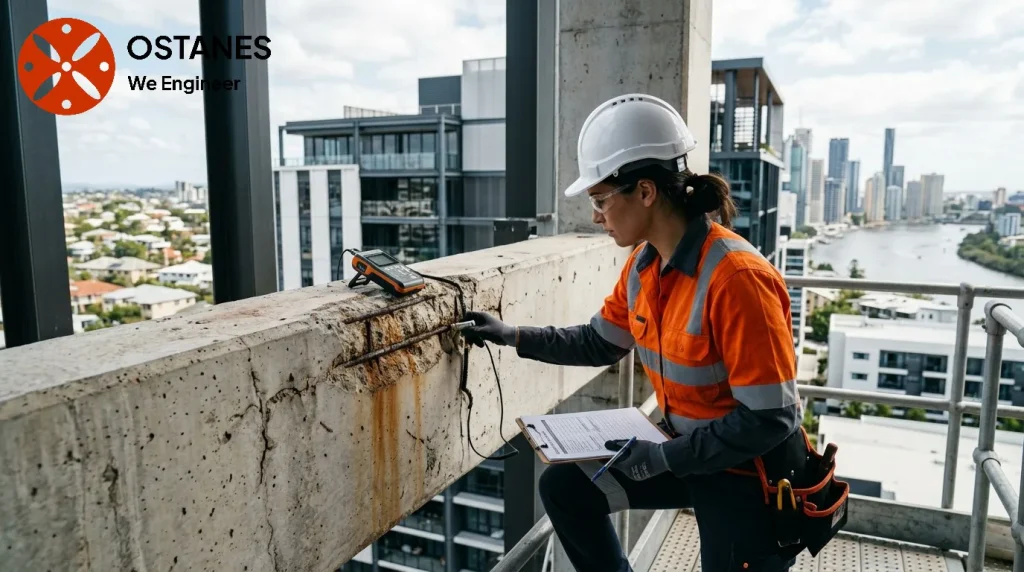
Rust staining on a non-structural item and deterioration of a supporting post or connection have different implications. Record the location and the element involved. Steel members, fixings, baseplates and embedded reinforcement may require different investigation methods.
Identify the affected element
Visible colour alone does not establish how much material has been lost. Flaking, pitting, loose fixings, distortion or cracked concrete around reinforcement can provide additional context. Do not scrape or dismantle a suspect load-bearing connection to test it.
Consider exposure and moisture pathways
Persistent wetting, damaged protective systems, trapped moisture and coastal exposure can be relevant to deterioration. The assessment should consider the actual exposure and construction details instead of treating every property near the coast as equally affected.
Look for leaks and areas where water collects, and keep previous repair or coating records. A roofer, plumber or other trade may be needed to stop the source. Structural advice addresses the affected supporting system; resolving water entry may require additional building-envelope expertise.
Photographs that help an assessment
- Photograph the whole member and its supports from a safe location.
- Record close-ups of the affected connection or surface without disturbing it.
- Note dates, exposure, leaks and any change in use or loading.
- Provide available drawings, material information and earlier reports.
The engineer can then scope inspection and any further evidence required. Thickness measurements, testing or opening-up may be appropriate in some cases, but the method depends on the element and access. A surface inspection should not be represented as proof of every concealed condition.
Why coating is not always the complete repair
A protective coating can form part of a maintenance or remedial strategy, but it does not restore lost steel capacity by itself. The condition, cause and support path must be sufficiently understood before deciding on repair, replacement or strengthening.
Removing a post or connection can affect the structure it supports. The relevant professionals should address temporary support and construction sequencing where needed. Keep the final remedial design and inspection evidence with the property records.
Coordinate specialist repair with structural advice
Discuss structural inspection for the reported concern. If structural intervention is justified, structural engineering design can address the required solution within an agreed scope. Specialist corrosion testing or protective-system advice may also be needed.
Do not assume that Ostanes supplies cathodic-protection installation, coating application or every laboratory test. Confirm responsibilities and specialist inputs as part of the engagement. The NCC structural provisions provides the relevant design context, while QBCC home maintenance helps with general property-care considerations.
Track changes after the intervention
Retain before-and-after photographs, the repair specification and records of changes to drainage or exposure. Ask which locations should be observed and what would trigger an earlier review.
An assessment describes its scope and evidence at the time. Later leaks, damage or alterations can change the position; a previous repair does not establish that every member remains adequate indefinitely.
Frequently asked questions
Does surface rust prove a member is unsafe?
No. Structural significance depends on the element, extent of deterioration and support arrangement. Changing or pronounced damage should be assessed.
Can painting over corrosion fix the structure?
A coating does not by itself replace lost material or resolve a damaged load path. The repair should follow assessment.
When should I restrict access?
Keep clear of loose, visibly failing or unstable elements and arrange appropriate prompt professional assistance rather than relying on routine booking as clearance.
Related property guidance
For the related subject, read leaks and foundation movement. The guides answer different questions and complement the agreed project-specific assessment.
Discuss your project with Ostanes Engineering
Discuss structural inspection with Ostanes Engineering for the questions described above. Where the evidence or proposal identifies a related need, structural engineering design can be scoped separately. Confirm the inputs, deliverables and specialist responsibilities for the actual project.
Complete the contact form with your property location, the concern or proposed work, safe photographs and available drawings or reports. Contact us through the form for a project-specific cost estimate. The team will respond as soon as possible.
Official references and further reading
Consult QBCC home maintenance and NCC structural provisions for the relevant context. Check the requirements for the actual project with the responsible professionals.
