
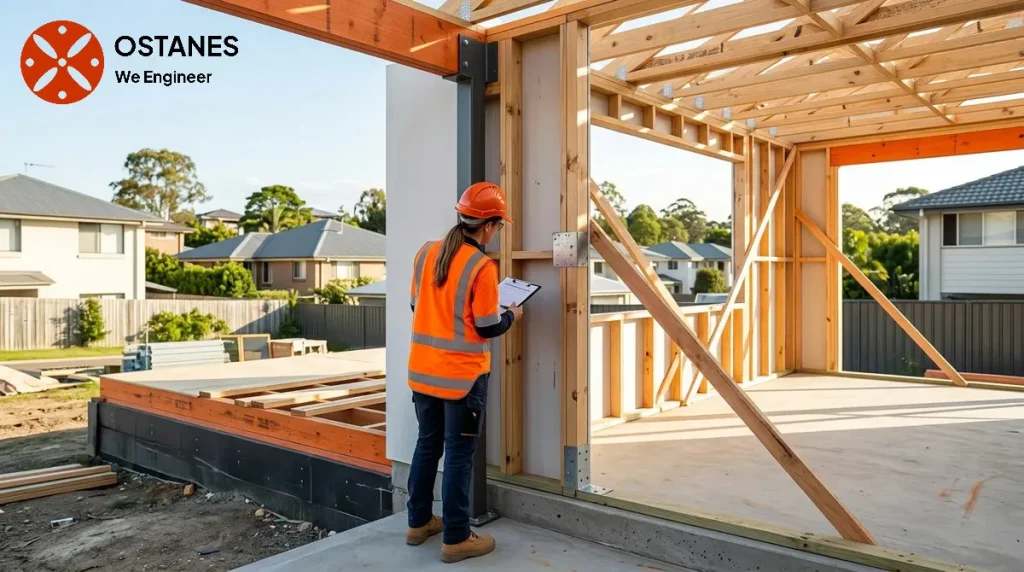
Prefabricated-component certification must be coordinated with the site-specific supports and connections. A component document may not cover installation changes or every interface with the completed structure.
What certification question applies to the component?
When assessing manufactured building components engineering, the core question revolves around whether the component’s design and use are consistent across all applications or if they are unique to a particular site. A product-line question typically concerns a component that is mass-produced and intended for consistent use under defined conditions. In contrast, a site-specific question arises when a component, even if prefabricated, is integrated into a unique project where its performance may be affected by site conditions, load requirements, or interactions with other building elements. Understanding this difference is crucial for determining the appropriate engineering assessment without making assumptions about compliance based on component type alone.
Product-line certification and site-specific engineering: the practical distinction
The practical difference between repetitive product-line certification and bespoke, site-specific engineering certification lies in their scope and applicability. Product-line certification, often associated with prefab structural certification, addresses the design and manufacturing consistency of a component intended for repeated use under a defined set of parameters. This type of certification verifies that the component, as a standalone item or within its specified typical use cases, meets relevant standards.
However, site-specific engineering certification evaluates how that component performs within a particular building project, considering unique site conditions, structural interactions, and project-specific loads. While a prefabricated component may have valid product-line certification, this evidence does not automatically transfer to every project. The unique stresses, environmental factors, or integration methods of a specific building may require a separate engineering assessment to confirm suitability and compliance for that distinct application.
Checking the NCC and Queensland professional requirements
When dealing with structural certification, it is essential to consult authoritative sources. Manufacturers, builders, and fabricators should refer to the National Construction Code for governing technical provisions and performance requirements. The Australian Building Codes Board (ABCB) publishes the National Construction Code, which sets out the minimum requirements for the design and construction of buildings in Australia. For Queensland-specific professional requirements, checking current information from the Board of Professional Engineers of Queensland (BPEQ) is also important. This includes understanding the role of a Registered Professional Engineer of Queensland (RPEQ) in certifying structural designs. Where the NCC or BPEQ information does not directly resolve a component’s suitability for a specific project, an appropriate engineering assessment is typically required.
What information should a fabricator or builder clarify?
Before seeking structural certification, fabricators and builders should clarify several key points. These include the component’s precise intended application and whether this application deviates from its standard product specifications. It is also important to understand the specific project conditions, such as expected loads, environmental factors, and how the component will interface with other structural elements. Gather all available technical documentation for the component, including design specifications, material properties, and any existing product certification. Finally, articulate the exact compliance question that remains unresolved for the component within the project context, as this will guide the engineer’s assessment.
Does product-line certification apply automatically to every installation?
No, product-line certification does not automatically apply to every installation. Its applicability depends on whether the specific component’s intended use and the project conditions match the parameters under which the original product was certified. Any deviation may require further assessment.
When is site-specific engineering certification relevant?
Site-specific engineering certification becomes relevant when project conditions, such as unique load requirements, specific site constraints, or interactions with other structural elements, fall outside the scope of a component’s standard product-line certification. It ensures the component is suitable for that particular application.
Which sources should fabricators and builders check?
Fabricators and builders should consult the current National Construction Code (NCC) for building requirements, guidance from the Australian Building Codes Board (ABCB), and relevant professional requirements and registers from the Board of Professional Engineers of Queensland (BPEQ).
Coordinate component certification with site installation
The component’s manufacturing details and its connection to the completed structure both matter. Supply supplier drawings, quality records, testing information and the proposed site interfaces. A certificate for a prefabricated member does not necessarily cover foundations, supports, lifting arrangements or installation changes. Ask which configurations and assumptions are included and who is responsible for the site-specific design. Keep revisions traceable so the installed component can be compared with the documentation supplied to the certifier.
Related property guidance
For background on the related issue, read Form 15 and design documentation. Use it alongside the project-specific evidence and service scope described in this guide.
Discuss your project with Ostanes Engineering
Discuss product design certification with Ostanes Engineering for the stated component and intended application. Where the product interfaces with a particular building, structural engineering design may also need to be coordinated. The product document’s limits and site-specific responsibilities should be clear.
Complete the contact form with your property location, the concern or proposed work, safe photographs and any available drawings, soil report or earlier reports. Contact us through the form for a project-specific cost estimate. The team will respond as soon as possible.
Official references and further reading
For the relevant regulatory or maintenance context, consult ABCB evidence of suitability and BPEQ certification update. These resources complement the project-specific advice described above.
