
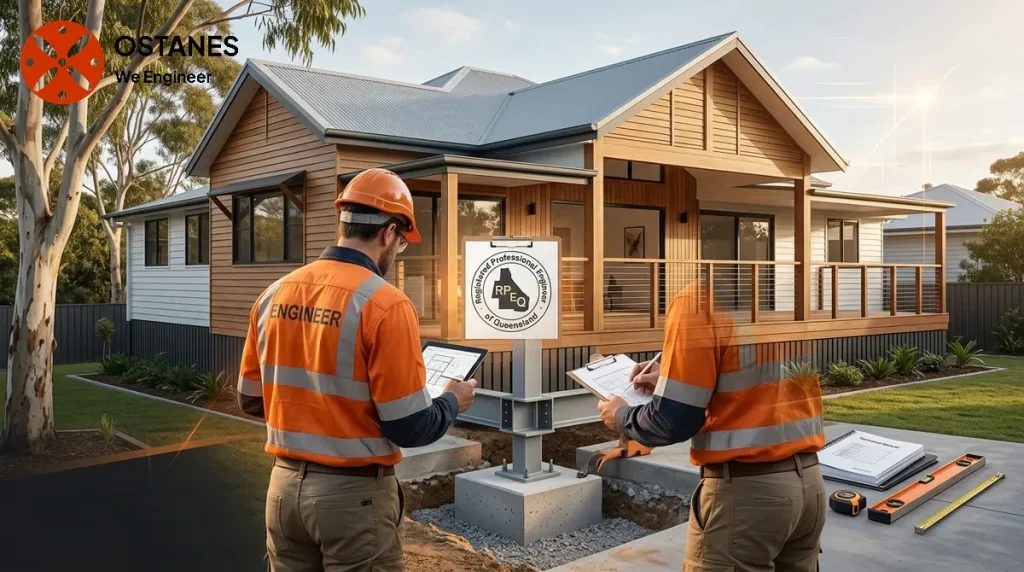
Product design certification concerns a defined product, application and set of assumptions. It should not be treated as approval for every installation or as certification of an entire building.
What product design certification means in practice
Product design certification involves assessing the design of a structural component or system to ensure it meets engineering principles and relevant standards for its intended use. This differs from the approval of a specific building project. While a product may have a certified design, its application in a particular building still requires assessment by a building certifier or other relevant professional. For manufacturers, fabricators, and suppliers of items like modular structural systems, brackets, framing kits, or proprietary construction hardware, this means establishing that the product’s design is sound. General product design information does not inherently equate to project-specific suitability; that depends on the unique conditions of each building site and overall project design. A product that appears suitable from a general description may still require a specific engineering assessment to confirm its use within a building project.
Who may need to consider certification questions
Manufacturers, fabricators, and suppliers are the primary parties who may need to consider product design certification questions. If you develop or supply products that serve a structural purpose in building construction, how those products are intended to be used, their structural function, and the context of the building project can all influence whether design certification is relevant. This is particularly true for products that are proprietary (meaning unique to a specific maker) and form part of the building’s load-bearing structure. Whether a specific product requires certification depends on its characteristics and how it integrates into the overall building design, not solely on who supplies it.
Queensland regulatory context
In Queensland, the regulatory framework for building and construction is comprehensive. Key legislation, such as the Building Act 1975, provides the foundation for building standards and safety requirements. The Planning Act 2016 also plays a role in how land is developed and how building projects are approved. For design and inspection certification, the Queensland Building and Construction Commission (QBCC) provides guidance and forms relevant to the building industry, including those related to design and inspection. The QBCC forms guidance can help clarify the documentation required for various stages of a building project, often necessitating input from registered engineers for structural elements.
What information affects the question
To determine whether a proprietary structural product raises certification questions, several categories of information are typically considered. These include the product’s precise intended structural role within a building, its proposed method of installation, the design assumptions made during its development, and any supporting technical data or calculations. The relationship of the product to the overall building project, including other components it interacts with, is also crucial. Understanding these factors helps clarify the scope of any necessary engineering assessment.
Is product design certification the same as building approval?
No, product design certification focuses on the engineering design of a specific component or system, whereas building approval relates to the entire building project, ensuring it complies with all relevant building codes and regulations for its specific site and use. While a product’s design certification may be part of a building approval process, they are distinct.
Who may need product design certification in Queensland?
Manufacturers, fabricators, and suppliers of structural products intended for use in Queensland building projects may need to consider product design certification. This is particularly relevant for proprietary items like pre-fabricated wall systems, specialised brackets, or unique framing kits that contribute to a building’s structural integrity.
Can a supplier rely on a product description alone?
Relying solely on a general product description may not be sufficient for structural applications. The intended use, specific project conditions, and integration with other building elements often require further engineering assessment to ensure the product is suitable and compliant for that particular application.
What should a product developer clarify before supplying a structural product?
A product developer should clarify the structural function of their product, its design assumptions, any applicable Australian Standards, and the types of projects it is intended for. Providing comprehensive technical documentation can assist in any subsequent engineering review required for specific applications.
Define the product, application and limits of certification
Provide drawings, materials, intended uses, test information and installation details. A product assessment should identify the configurations and conditions it covers, rather than imply approval for every possible building or site. Changes to materials, connections or installation may fall outside the assessed scope. Discuss the required evidence with the engineer and the project certifier. Structural product documentation is one part of demonstrating suitability; it is not automatically a whole-building approval or a certification of unrelated performance characteristics.
Related property guidance
For background on the related issue, read Form 15 and design documentation. Use it alongside the project-specific evidence and service scope described in this guide.
Discuss your project with Ostanes Engineering
Discuss product design certification with Ostanes Engineering for the stated component and intended application. Where the product interfaces with a particular building, structural engineering design may also need to be coordinated. The product document’s limits and site-specific responsibilities should be clear.
For a project-specific cost estimate, complete the contact form with your property location, the concern or proposed work, safe photographs and any available drawings, soil report or earlier reports. The team will respond as soon as possible.
Official references and further reading
For the relevant regulatory or maintenance context, consult ABCB evidence of suitability and BPEQ certification update.
