
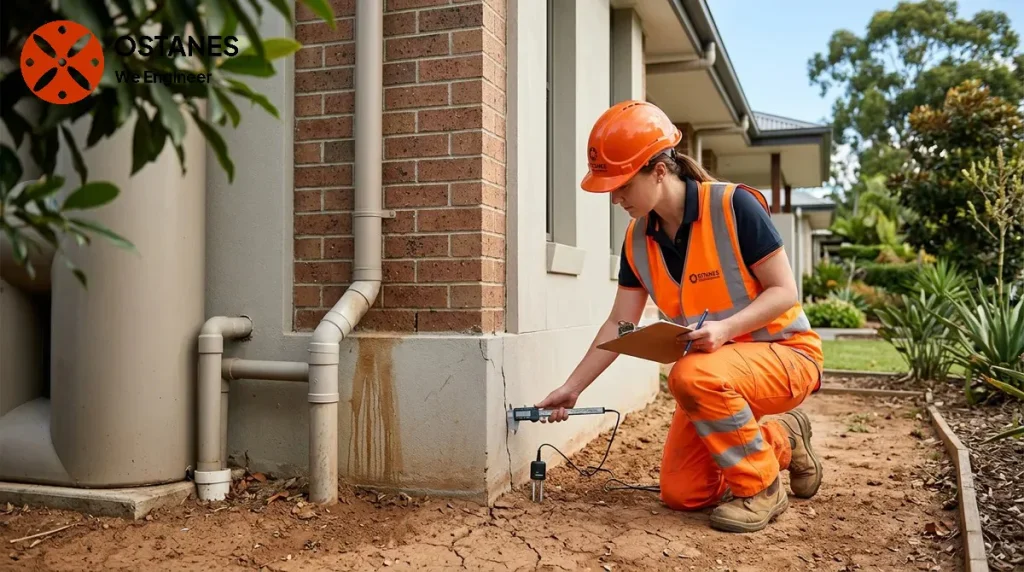
Climate trends provide context for moisture management and resilience, not a diagnosis of one building. Foundation concerns still require site-specific movement, ground and maintenance evidence.
Opening context
Queensland homeowners are increasingly observing changes in weather patterns, prompting questions about the resilience of their homes. This article focuses on the relationship between these changing conditions, reactive clay soils, and the potential implications for building foundations. Understanding how shifts between prolonged drying and severe wet periods can affect the ground beneath a home is key to discerning general risks from specific property concerns.
How changing weather affects reactive clay soils
Reactive clay soils, common across parts of Queensland, are characterised by their tendency to expand when wet and shrink when dry. This shrink-swell behaviour can lead to ground movement. Prolonged drying conditions may cause these soils to shrink, potentially leading to settlement. Conversely, severe wet conditions, such as intense rainfall events, can lead to expansion. These cycles of expansion and contraction can create conditions associated with foundation movement. Research from bodies like the Bureau of Meteorology (BOM) indicates shifts in rainfall patterns across Australia, including Queensland, with some regions experiencing more intense short-duration rainfall events and others facing longer dry spells. Geotechnical studies further support the understanding that changes in soil moisture content directly influence the volume of reactive clays, which in turn may impact overlying structures.
What extreme weather foundation damage Queensland may involve
Changes in moisture levels around a property, particularly those built on reactive clay, can manifest as observable signs of potential foundation movement. Homeowners might notice new or widening cracks in internal or external walls, especially near corners of doors and windows. Doors and windows may become difficult to open or close, suggesting changes in the frame’s alignment. Floors might appear uneven or sloping. Externally, changes in the ground around the building, such as gaps between the soil and the foundation, or visible changes in paved areas adjacent to the house, can be indicators. These observations do not assign a specific cause, but they can be signs that warrant further assessment.
Reading climate risk without diagnosing a property
While regional climate trends provide valuable context for understanding potential environmental influences on building foundations, they cannot diagnose the specific condition of an individual property. General information about climate change structural risk Australia presents, such as increased frequency of extreme weather events, helps to frame potential challenges. However, the unique site conditions of each property—including its specific soil type, drainage, and construction—play a critical role in how a building responds to environmental changes. Therefore, regional climate data alone cannot establish the exact cause, severity, or necessary response for an issue at a particular home. If you suspect foundation movement or observe acute-risk conditions like sudden, significant cracks or structural shifts, an on-site engineering assessment is necessary for a definitive determination.
Can changing weather patterns cause foundation damage in Queensland?
Changing weather patterns, particularly prolonged dry periods followed by intense rainfall, can affect the moisture content of reactive clay soils in Queensland. This can lead to cycles of soil shrinkage and expansion, which may influence foundation movement. However, a specific building’s damage is influenced by its unique site conditions, not solely by regional weather trends.
Does a crack prove that climate change caused foundation movement?
A crack in a wall does not, by itself, prove the cause, severity, or safety implication of foundation movement, nor does it definitively link the issue to climate change. Cracks can result from various factors, and an on-site engineering assessment is needed to determine the specific cause and condition of the property.
What should a Queensland homeowner do after noticing possible movement?
If you notice signs of possible foundation movement, such as new or widening cracks, misaligned doors or windows, or uneven floors, it is important to contact a qualified professional for an assessment. For acute-risk conditions, such as sudden and significant structural changes, immediate professional inspection is advisable.
Separate climate trends from a diagnosis of one building
Queensland climate information can explain why drainage, moisture management and resilience planning deserve attention. It cannot establish the cause of a particular foundation problem without property-specific evidence. Record the building’s actual movement, drainage and maintenance history and obtain the relevant soil information. An engineer may recommend further geotechnical investigation where needed. Avoid claiming that climate change explains every new crack or that one standard repair will suit all properties exposed to changing rainfall and temperature patterns.
Discuss your project with Ostanes Engineering
Ostanes Engineering offers a structural crack and movement report to assess the reported symptoms and identify appropriate next steps. If the findings justify new foundations or remedial structural design, foundation structural engineering can be discussed as a separate scope; it is not assumed to be necessary for every crack.
Complete the contact form with your property location, the concern or proposed work, safe photographs and any available drawings, soil report or earlier reports. Contact us through the form for a project-specific cost estimate. The team will respond as soon as possible.
Official references and further reading
For the relevant regulatory or maintenance context, consult BOM climate report and QBCC subsidence guidance. These resources complement the project-specific advice described above.
